

Gymnocalycium denudatum – Spider Cactus – 5 Seed Pack
R50,00
INTERNATIONAL CUSTOMERS: Please read our shipping terms and conditions here before placing your order: Shipping Terms and Conditions
15 in stock
Gymnocalycium, commonly called chin cactus, is a genus of about 70 South American species of cacti. The genus name Gymnocalycium (from Greek, “naked calyx”) refers to the flower buds bearing no hair or spines. Their main area of distribution is Argentina, part of Uruguay, Paraguay, southern Bolivia and part of Brazil. Most species are rather small varying from 4 to 15 centimetres in size. They are popular for their easy flowering habits, and the flowers are generally brightly coloured. Gymnocalycium species are slow to get to a reasonable size. It will offset after a considerable period of time. They are summer growers and needs regular water in summer (but do not over-water). Keep rather dry in winter. They do not like extremely bright situations. Give them some shade during the hottest part of the day. Keep them in low PH compost; otherwise growth will stop altogether. Feed it with a high potassium fertilizer in summer. It is quite frost resistant if kept dry (hardy to -5° C). They are best grown in pots and also do well in rockeries.
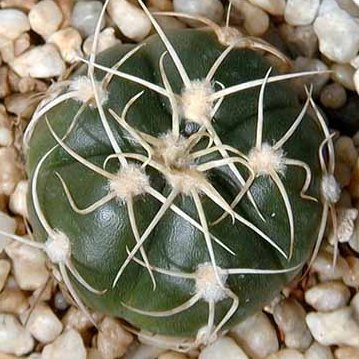
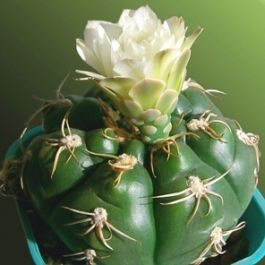
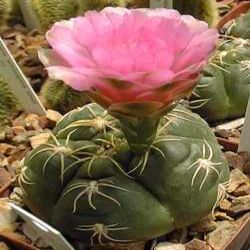
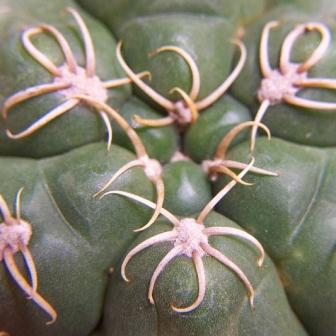
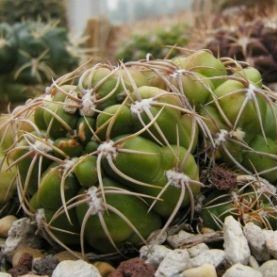
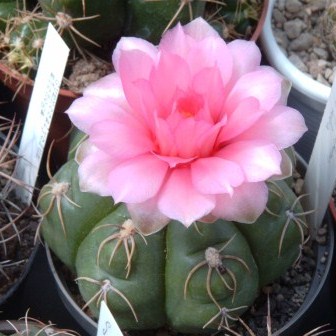
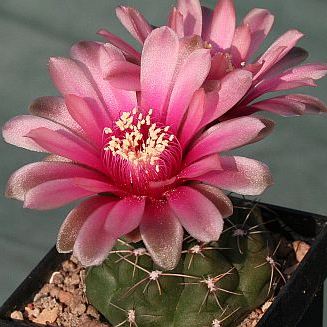
Gymnocalycium denudatum is commonly known as Spider Cactus. This name refers to the shape of the white spider-like spines. This species is native to South America where it can be found growing in Brazil’s Rio Grande do Sul, Argentina’s Corrientes Misiones, Paraguay and Uruguay. This species has nearly armless spines flattened against the body looking like a bunch of white spiders crawling on the cactus. It forms a small globular, usually unbranched cactus, with a glossy dark green body and rounded ribs. It grows up to 15cm in diameter and 10cm tall. During spring and summer it bears large cream-white to red flowers that are up to 7 cm wide. This Gymnocalycium is very easy to grow and offers no cultivation difficulties. This summer grower needs moderate to copious amounts of water during summer. It is frost resistant down -4°C if kept dry. Feed with a high potassium fertilizer during summer. It enjoys full sun to light shade.


