
Lycium amoenum – Snake Honeythorn; Grootblomkriedoring – 5 Seed Pack
R22,75
INTERNATIONAL CUSTOMERS: Please read our shipping terms and conditions here before placing your order: Shipping Terms and Conditions
6 in stock
The genus Lycium, commonly known as Boxthorn, Wolfberry or Goji, belongs to the Solanaceae (Nightshade) family, alongside familiar plants such as tomatoes, potatoes and peppers. Comprising approximately 100 species, this fascinating genus is widely distributed across Africa, Asia, Europe and the Americas, particularly in arid and semi-arid environments. Southern Africa is an important centre of diversity, with numerous indigenous species adapted to some of the region’s most demanding landscapes.
Typically forming intricately branched, often thorny shrubs or small trees, Lycium species combine remarkable resilience with understated ornamental beauty. Their delicate, tubular to bell-shaped flowers appear in shades of white, cream, pink, lilac and violet, often followed by colourful berries ranging from golden yellow and orange to brilliant red or even black. Many species provide valuable food and shelter for birds and other wildlife, while their tolerance of drought, wind and challenging soils makes them particularly interesting to growers seeking unusual, hardy plants.
From the formidable South African Lycium ferocissimum (African Boxthorn) to the internationally celebrated Lycium chinense (Goji Berry), this diverse genus offers something for botanical collectors, indigenous plant enthusiasts, wildlife gardeners and growers interested in unusual fruit-bearing shrubs. Whether cultivated for their architectural form, delicate flowers, ecological value or botanical curiosity, Lycium species are rewarding additions to specialised plant collections.
Lycium amoenum (Lycium campanulatum, Lycium rigidum var. angustifolium) – Snake Honeythorn, Large-Flowered Honeythorn; Grootblomkriedoring
Discover the extraordinary charm of Lycium amoenum, a captivating and lesser-known South African shrub belonging to the Solanaceae family. This distinctive member of the Honey-thorn group is prized for its exquisite, purple-marked flowers, attractive semi-succulent foliage and remarkable ability to thrive in dry, challenging environments. Native to the arid and semi-arid landscapes of South Africa’s Northern and Western Cape provinces, with its natural distribution extending into southern Namibia, this fascinating species inhabits rocky slopes, dry riverbeds, sandy watercourses and rugged shrublands. From the remote landscapes of Bushmanland and Namaqualand to the southwestern Cape, Lycium amoenum represents a beautiful example of southern Africa’s remarkably adaptable indigenous flora.
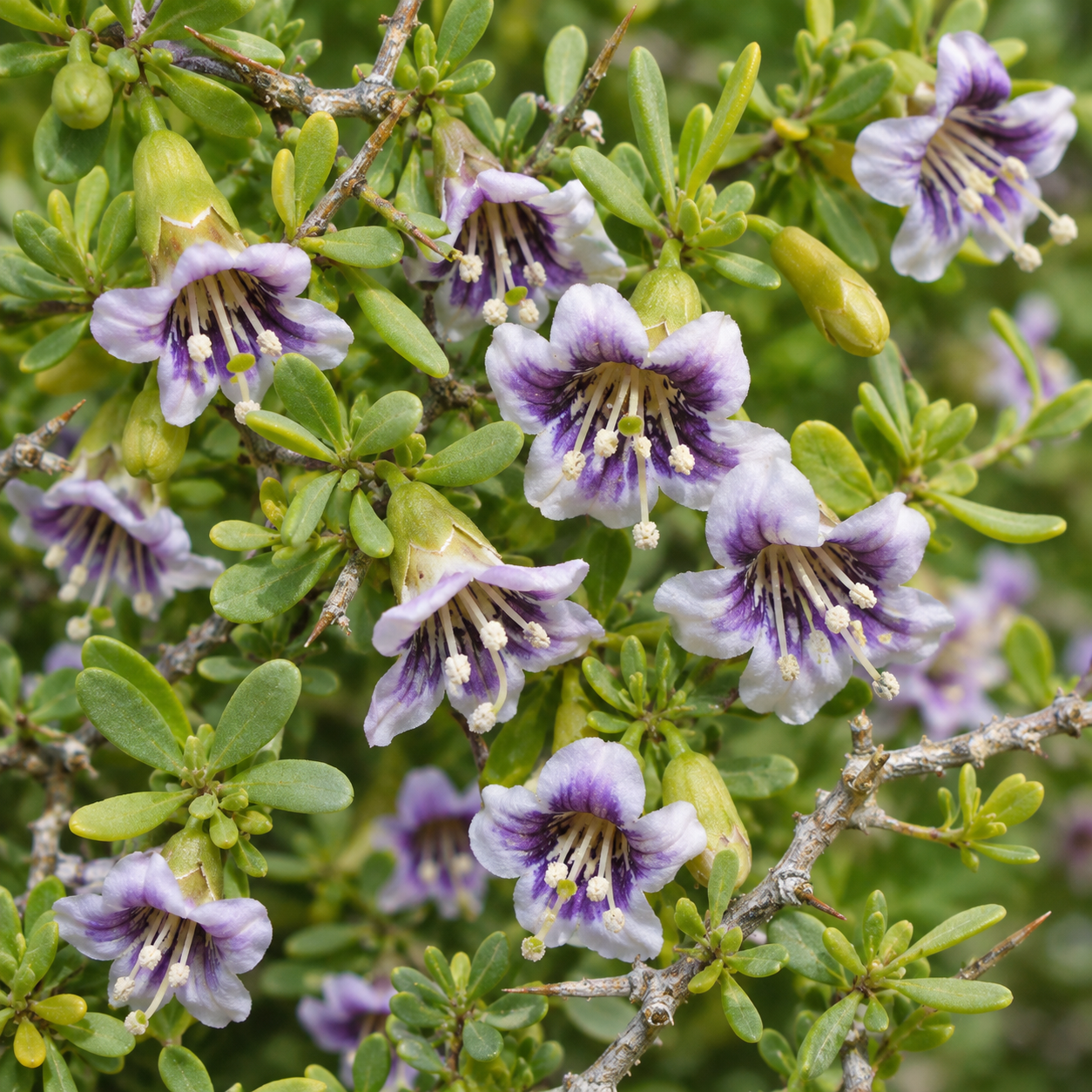
Developing into a densely branched, rigid and thorny shrub reaching approximately 2–3 metres in height, Lycium amoenum possesses an appealing combination of rugged character and delicate detail. Its woody, greyish-brown branches carry numerous short shoots adorned with compact clusters of small, fleshy to leathery leaves. These attractive leaves are oblong to narrowly spoon-shaped, displaying subtle shades of fresh green, sage green and soft yellowish-green. Their slightly succulent texture helps the plant withstand periods of limited moisture, while the intricate branching structure and sharp thorns create a naturally sculptural appearance. This unusual combination of architectural growth and finely textured foliage makes it particularly interesting for collectors of drought-adapted African shrubs.
The real enchantment of Lycium amoenum, however, lies in its exceptionally beautiful flowers. Emerging among the leafy branches, the relatively large, bell-shaped to broadly funnel-shaped blossoms display an extraordinary combination of creamy white to pale lavender petals and richly contrasting violet-purple markings. The inner surfaces are decorated with deep purple veining and strikingly patterned throats, while the gently reflexed floral lobes reveal prominent, slender stamens tipped with delicate, creamy-yellow anthers. Flowering occurs predominantly from June to September in its natural habitat, bringing welcome colour during the Southern Hemisphere’s winter and early spring. Following pollination, the flowers develop into attractive, rounded to slightly oval berries that ripen to a vivid red, adding another delightful ornamental feature to this remarkable species.
Perfectly adapted to its often unforgiving natural environment, Lycium amoenum is an appealing choice for water-wise gardens, indigenous landscaping, specialised botanical collections and enthusiasts of unusual South African flora. It favours sunny positions and well-drained, preferably sandy or gritty soils, making it especially suitable for dryland gardens, rockeries and naturalistic plantings. Once established, its drought tolerance and resilient character make it a rewarding option for growers interested in conserving water while cultivating botanically fascinating plants. International collectors can also enjoy raising this unusual species in suitable Mediterranean-type and other dry climates, or in well-drained containers where growing conditions can be carefully controlled. Its beautiful flowers, distinctive growth habit and adaptation to arid environments make it a particularly desirable addition to collections of rare and unusual plants.
Bring the extraordinary botanical beauty of South Africa’s rugged landscapes into your own growing collection with Lycium amoenum! Whether you are captivated by its delicately veined purple-and-cream flowers, intrigued by its hardy thorny architecture or simply searching for something genuinely different, this distinctive species offers a wonderful opportunity to cultivate one of southern Africa’s lesser-known botanical treasures. Check out our online seed store and discover our vast and diverse selection of indigenous and exotic plant seeds. Buy Now or Add to Cart and experience the satisfaction of growing this fascinating African shrub from seed! Seeds and All offers combined South African and International shipping.


