
Lycium gariepense – Gariep Box Thorn; Gariepkriedoring – 5 Seed Pack
R22,75
INTERNATIONAL CUSTOMERS: Please read our shipping terms and conditions here before placing your order: Shipping Terms and Conditions
6 in stock
The genus Lycium, commonly known as Boxthorn, Wolfberry or Goji, belongs to the Solanaceae (Nightshade) family, alongside familiar plants such as tomatoes, potatoes and peppers. Comprising approximately 100 species, this fascinating genus is widely distributed across Africa, Asia, Europe and the Americas, particularly in arid and semi-arid environments. Southern Africa is an important centre of diversity, with numerous indigenous species adapted to some of the region’s most demanding landscapes.
Typically forming intricately branched, often thorny shrubs or small trees, Lycium species combine remarkable resilience with understated ornamental beauty. Their delicate, tubular to bell-shaped flowers appear in shades of white, cream, pink, lilac and violet, often followed by colourful berries ranging from golden yellow and orange to brilliant red or even black. Many species provide valuable food and shelter for birds and other wildlife, while their tolerance of drought, wind and challenging soils makes them particularly interesting to growers seeking unusual, hardy plants.
From the formidable South African Lycium ferocissimum (African Boxthorn) to the internationally celebrated Lycium chinense (Goji Berry), this diverse genus offers something for botanical collectors, indigenous plant enthusiasts, wildlife gardeners and growers interested in unusual fruit-bearing shrubs. Whether cultivated for their architectural form, delicate flowers, ecological value or botanical curiosity, Lycium species are rewarding additions to specialised plant collections.
Lycium gariepense – Gariep Honeythorn, Gariep Box Thorn; Gariepkriedoring
Discover the captivating beauty of Lycium gariepense, commonly known as Gariep Box Thorn or Gariepkriedoring, a fascinating and distinctive southern African shrub belonging to the Solanaceae family. This remarkable species combines delicate lilac-purple flowers, attractive succulent foliage and an intricate network of thorny branches with the extraordinary resilience of a true desert survivor. Native to the rugged landscapes of southern Namibia and South Africa’s Northern Cape, its natural distribution extends from the Witpütz region of Namibia through the lower Orange (Gariep) River Valley into the spectacular Richtersveld. Here, among the dramatic mountains, rocky ridges and sun-baked cliffs of the Desert and Succulent Karoo biomes, this fascinating shrub flourishes in some of southern Africa’s most challenging environments, making it a particularly desirable botanical treasure for collectors of unusual and drought-adapted indigenous plants.
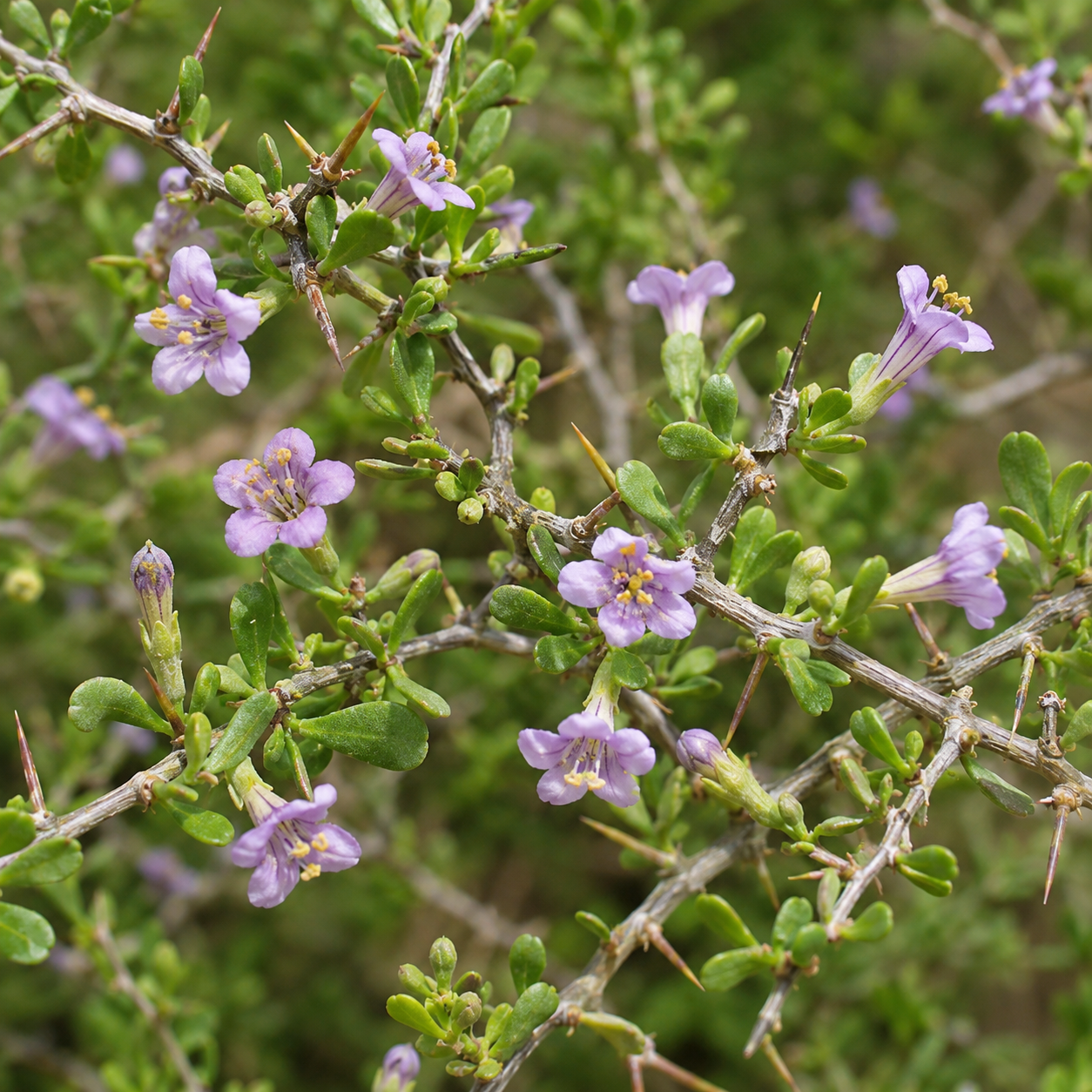
Growing into a compact, intricately branched and spreading shrub reaching approximately 1.2 metres in height, Lycium gariepense possesses a wonderfully distinctive architectural character. Its slender, woody branches develop an attractive greyish-brown appearance and are armed with numerous sharp, needle-like thorns, creating a dense and intricately interwoven structure. Along these rugged stems emerge delightful clusters of small, fleshy leaves, typically measuring 10–15 mm in length. The leaves are narrowly obovate to spoon-shaped, with rounded tips and attractive shades of fresh green to muted olive-green. Their succulent texture provides an important adaptation to the plant’s naturally arid surroundings, while their closely grouped arrangement produces a charming contrast against the sharp spines and weathered woody branches. This combination of compact growth, delicate foliage and formidable thorns gives Lycium gariepense an appealing, almost miniature-tree-like appearance that is particularly attractive to enthusiasts of unusual shrubs and specialised botanical collections.
The flowers of Lycium gariepense are delightful miniature jewels, bringing an unexpected softness to its rugged desert character. Appearing among the dense clusters of leaves, the small, tubular to narrowly funnel-shaped blossoms measure approximately 7–9 mm in length and feature delicate creamy-white floral tubes decorated with subtle purple veining. Their spreading, pale lilac to soft lavender-purple lobes create a beautiful contrast against the fresh green foliage, while the intricate floral structures add further botanical interest. In its natural southern African habitat, flowering is closely associated with summer rainfall, with blossoms appearing particularly after summer showers rather than during a strictly defined calendar period. Following successful pollination, female plants produce attractive, small, glossy, egg-shaped berries approximately 5–6 mm long that ripen to a brilliant scarlet-red. An especially fascinating characteristic of this species is its dioecious reproductive habit, with functionally male and female flowers occurring on separate plants, making the cultivation of several seedlings particularly worthwhile for collectors hoping to enjoy both flowers and colourful fruits.
Beyond its delicate ornamental appeal, Lycium gariepense is an exceptionally interesting species for growers fascinated by the remarkable survival strategies of southern Africa’s desert flora. Naturally occurring on exposed, dry, rocky slopes, ridges and cliffs, often among igneous rock formations, it is superbly adapted to intense sunshine, limited rainfall and mineral-rich, free-draining substrates. These characteristics make it an appealing candidate for specialised rock gardens, dryland landscaping, indigenous botanical collections and carefully managed container cultivation. South African gardeners in suitable dry regions can appreciate its natural resilience and distinctive indigenous character, while international collectors may enjoy cultivating this unusual species in Mediterranean-type and other arid climates, provided that excellent drainage, abundant sunlight and protection from prolonged severe frost are available. Its naturally compact proportions, intricate thorny framework and delicate floral details also make it an intriguing subject for enthusiasts of sculptural plants and unusual African shrubs.
Introduce a remarkable piece of southern Africa’s dramatic desert heritage into your botanical collection with Lycium gariepense. Whether you are captivated by its charming lilac-purple flowers, tiny succulent leaves, brilliant scarlet berries or beautifully intricate thorny architecture, this extraordinary species offers an exciting opportunity to cultivate something genuinely distinctive from seed. An especially appealing choice for indigenous plant enthusiasts, desert plant collectors, rock garden specialists and adventurous growers seeking lesser-known members of the Nightshade family, Gariep Box Thorn is a fascinating example of nature’s ability to combine delicate beauty with exceptional resilience. Check out our online seed store and discover our vast and diverse selection of indigenous and exotic plant seeds. Buy Now or Add to Cart and experience the satisfaction of growing this fascinating African shrub from seed! Seeds and All offers combined South African and International shipping.


