
Mesembryanthemum varians (Sceletium varians) – Salt Mesemb, Skeleton Plant; Soutvygie – 5 Seed Pack
R19,00
INTERNATIONAL CUSTOMERS: Please read our shipping terms and conditions here before placing your order: Shipping Terms and Conditions
19 in stock
Mesembryanthemum is a genus of flowering plants in the family Aizoaceae; like many members of this family, it is characterized by long-lasting flower heads. Flowers of Mesembryanthemum protect their gametes from night-time dews or frosts but open in sunlight. There is an obvious evolutionary advantage to doing this; where sun, dew, frost, wind or predators are likely to damage exposed reproductive organs, closing may be advantageous during times when flowers are unlikely to attract pollinators. It is indigenous to southern Africa. Many Mesembryanthemum species are known as ice plants because of the glistening globular bladder cells covering their stems, fruit and leaves,”… they sparkle like ice crystals”. In South Africa, Mesembryanthemums are known as “vygies” (from Afrikaans “vy”), although this term refers to many plants in the family Aizoaceae. Many succulent growers refer to them as mesembs. Species formerly placed in Mesembryanthemum have been transferred to other genera, such as Cleretum, Carpobrotus and Sceletium, although sources differ.
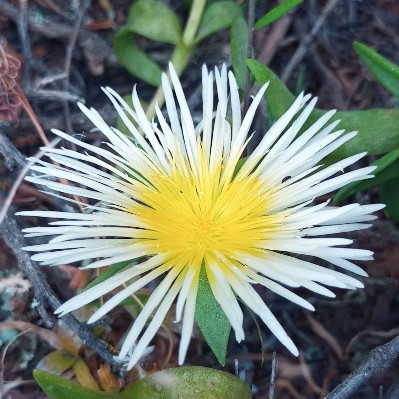
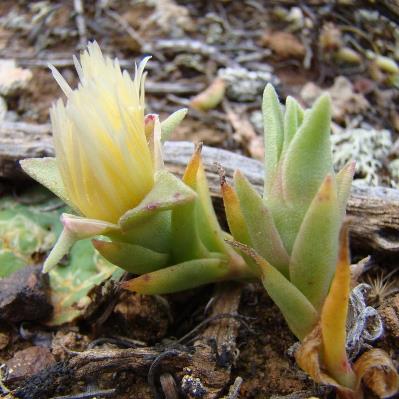
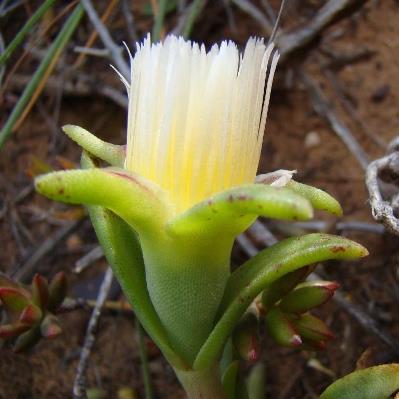
Mesembryanthemum varians, synonymously known as Mesembryanthemum varians, Sceletium subvelutinum, Sceletium subvelutinum forma luxurians, Sceletium subvelutinum forma subvelutinum or Sceletium varians and commonly known as Salt Mesemb or Skeleton Plant in English and Soutvygie in Afrikaans, is a South African endemic species found in the Western Cape province, ranging from Worcester to Robertson. It is a low growing, scrambling and short-lived perennial. The branches may become woody and thick with age. The succulent leaves are narrow and flat, not imbricate and to 20 mm long. The tips of the leaves are recurved, with bladder cells appearing as small dots.


