
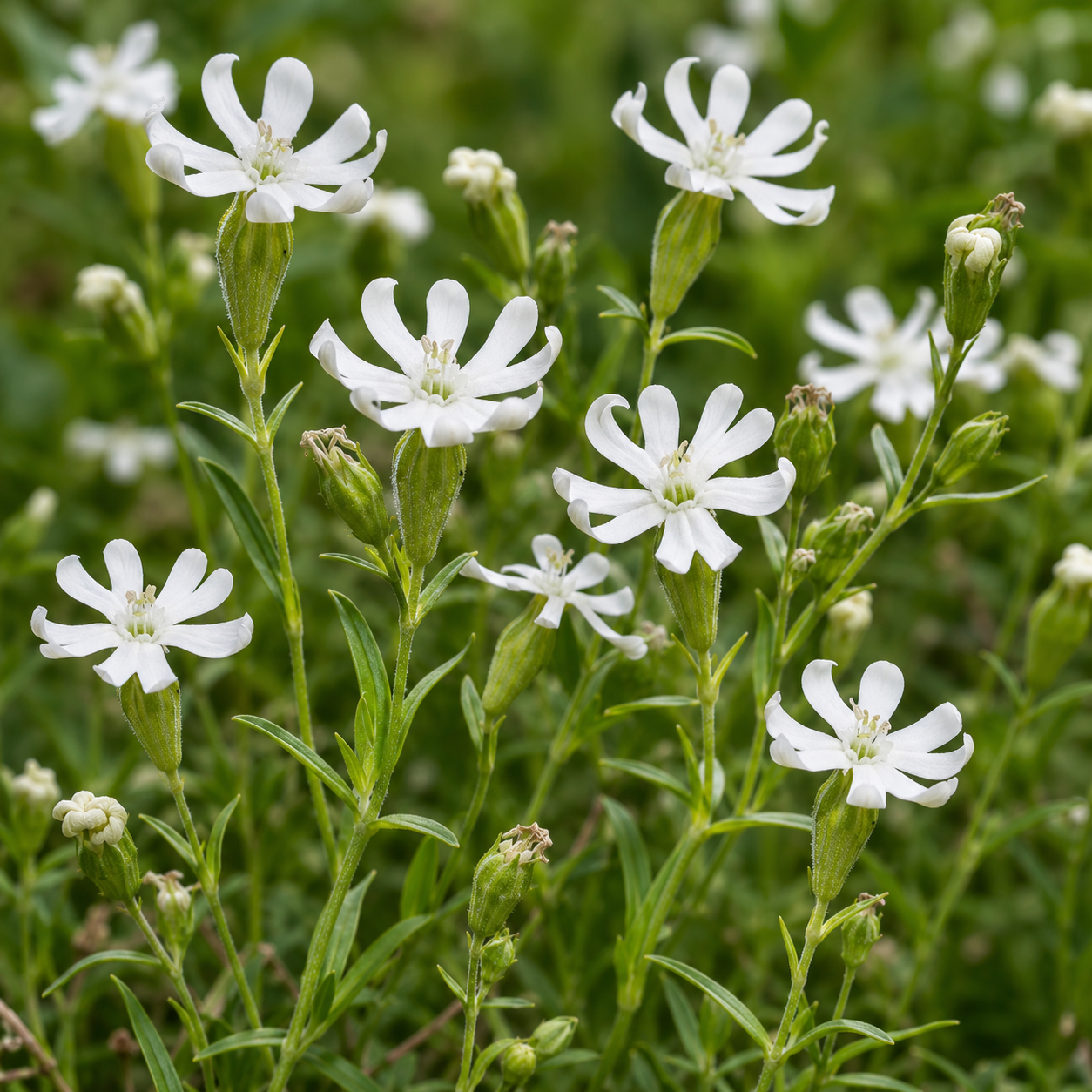
Silene mundiana – Limestone Catchfly – 5 Seed Pack
R21,50
INTERNATIONAL CUSTOMERS: Please read our shipping terms and conditions here before placing your order: Shipping Terms and Conditions
10 in stock
Belonging to the Caryophyllaceae family, commonly known as the Pink or Carnation family, Silene is a fascinating and remarkably diverse genus of approximately 890 species of flowering plants, affectionately known as Campions and Catchflies. Distributed across much of the world, particularly throughout the Mediterranean, Europe, Asia and Africa, these captivating annuals, biennials and perennials are celebrated for their delicate yet striking flowers, ranging from pure white and soft pink to vivid magenta, scarlet and deep purple. Many species feature beautifully notched or fringed petals, distinctive inflated calyces and slender stems, while certain varieties release enchanting fragrances after sunset to attract nocturnal pollinators.
From charming alpine cushion plants and colourful meadow wildflowers to the intriguing South African Dream Herb, Silene undulata, traditionally associated with the cultural practices of the Xhosa people, this extraordinary genus offers something for every plant enthusiast. Whether grown in rock gardens, wildflower meadows, ornamental borders or specialised botanical collections, Silene species combine remarkable diversity, ecological value and ornamental beauty, making them rewarding additions to gardens and collections worldwide.
Silene mundiana – Limestone Catchfly
Discover the delicate beauty of Silene mundiana, an enchanting and little-known South African wildflower belonging to the Caryophyllaceae family, commonly known as the Pink or Carnation family. Endemic to the Western Cape, this remarkable perennial is known from a remarkably restricted geographical range, with historical records from the Plettenberg Bay area and more recent populations occurring in De Hoop Nature Reserve near Bredasdorp. Here, it inhabits limestone outcrops, coastal cliffs, rocky crevices and the margins of seasonal wetlands, often growing in locations exposed to maritime winds and challenging environmental conditions. Its exquisite white flowers, graceful growth habit and fascinating adaptations to its coastal environment make it a particularly intriguing addition to specialised indigenous plant collections. For South African wildflower enthusiasts and International botanical collectors, Silene mundiana represents an opportunity to appreciate one of the Cape’s lesser-known flowering treasures.
Silene mundiana is a charming, low-growing geophytic perennial, typically reaching approximately 7–30 cm in height and developing a spreading, intricately branched growth habit that forms delicate cushions, loose mounds or compact mats. Its slender, gently sprawling stems arise from a persistent underground rootstock and are covered with fine, short hairs, giving them a subtly textured appearance. The foliage consists of small, narrow, linear to oblanceolate green leaves, generally measuring approximately 7–15 mm long, which complement the plant’s delicate proportions. Rising just above this attractive network of fine stems are exquisite snow-white flowers, each displaying five deeply divided petals that create the appearance of ten elegantly radiating segments. The slender, slightly curved petal lobes surround delicate pale stamens and a subtle central crown, giving the blossoms a wonderfully graceful, star-like appearance. Each flower emerges from a distinctive elongated, club-shaped green calyx, approximately 9–11 mm long, with fine longitudinal ribs and a covering of minute hairs. The combination of pristine white blossoms, finely textured green calyces and slender foliage creates an understated yet exceptionally beautiful botanical display.
In its natural Western Cape habitat, Silene mundiana flowers predominantly during spring, generally from September through October, with occasional flowering extending into November when seasonal conditions are favourable. The blossoms are principally pure white to creamy white, although very pale pinkish colouration has also been suggested in botanical descriptions. The flowers are usually carried singly or in pairs on delicate flowering branches, with numerous stems combining to create an enchanting display of starry white blooms above the surrounding green vegetation. Their deeply divided petals and gently recurved tips lend them an almost ethereal quality, particularly when illuminated by soft natural light. The graceful flowers, together with the developing green buds and intricately ribbed calyces, provide considerable ornamental interest throughout the flowering period. In its wild coastal environment, the species creates a beautiful contrast against the weathered limestone formations and low-growing vegetation characteristic of the Cape’s southern coastline.
Beyond its ornamental appeal, Silene mundiana is especially fascinating because of its unusual ecological adaptations and intriguing botanical history. Originally described by the nineteenth-century botanists Christian Friedrich Ecklon and Carl Ludwig Philipp Zeyher in 1834, this little-known species has remained relatively poorly represented in botanical collections. Its historical occurrence near Plettenberg Bay is particularly interesting, as the species has not been reliably rediscovered there, while populations at De Hoop demonstrate a remarkable ability to flourish in exposed limestone habitats. Plants growing on windswept coastal cliffs often develop compact, closely branched mats with smaller, thicker leaves, whereas individuals sheltered within rocky crevices may form more open, loosely arranged cushions. These contrasting growth forms beautifully illustrate how plants adapt to local environmental conditions. Another intriguing characteristic is its production of tiny, reddish-brown, kidney-shaped seeds with distinctive winged margins, a feature of botanical importance within its group of related Silene species. For cultivation, its preference for naturally well-drained limestone habitats suggests potential for specialised coastal gardens, carefully managed rockeries, Mediterranean-style plant collections and botanical displays where excellent drainage and suitable seasonal moisture can be provided. Its restricted natural distribution makes responsibly sourced, cultivated seed particularly important.
Introduce a truly unusual piece of South Africa’s coastal botanical heritage to your collection with Silene mundiana. Whether you are passionate about indigenous Cape flora, fascinated by unusual coastal perennials or searching for a delicate flowering species seldom encountered in conventional horticulture, this charming wildflower offers an exceptional combination of elegance, ecological interest and botanical rarity. Its graceful white star-shaped blossoms, finely ribbed green calyces and attractive cushion-forming habit make it an exciting prospect for dedicated gardeners and collectors alike. Browse our online seed store and explore our ever-growing range of rare, unusual and fascinating species from South Africa and around the world. Check out our extensive and diverse selection of botanical treasures to begin your next growing adventure! Seeds and All offers combined South African and International shipping, making it easier for plant lovers worldwide to discover and grow extraordinary species.


