

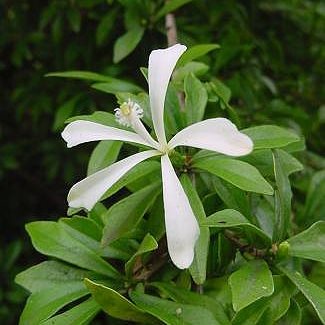
Turraea obtusifolia – Small Honeysuckle Tree, Lesser Honeysuckle Tree; Kleinkamperfoelieboom – 5 Seed Pack
R21,25
INTERNATIONAL CUSTOMERS: Please read our shipping terms and conditions here before placing your order: Shipping Terms and Conditions
18 in stock
Turraea obtusifolia commonly known as Small Honeysuckle Tree or Lesser Honeysuckle Tree in English and Kleinkamperfoelieboom in Afrikaans is an ornamental shrub with glossy dark green foliage, masses of showy white flowers in summer and decorative orange-red fruits in late summer to winter. It grows into a semi-evergreen shrub or small tree, 1-3 x 1 m. In open sunny places it is a bushy shrub but in shade or semi-shade it becomes more of a scrambler or small tree. The leaves are a dark glossy green, clustered on short side shoots, variable in size and shape on a single plant, from narrowly oblanceolate (lance-shaped with the widest part above the middle) to obovate (egg-shaped with the widest part above the middle) and sometimes with two lobes towards the tip. The flowers are completely unscented during the day, slightly fragrant at night, and are pollinated by moths. Before a flower opens, it deposits its pollen on the sides of the pollen presenter. The flowers remain open for more than one night and the pollen is transferred to other flowers by visiting moths Because only the very tip of the style is receptive to pollen, self-pollination is avoided. Turraea obtusifolia is said to be very poisonous. Its leaves, bark and rootbark are used in traditional medicine to treat stomach and intestinal ailments, and as a drastic purge. The leaves contain chemical compounds known as limonoids, like those found in the neem tree ( Azadirachta indica also in the Meliaceae, native to India ) which are used in agriculture as antifeedants i.e. as insect repellents to protect crop plants from insect damage. Turraea obtusifolia could therefore also be used as an antifeedant. The related species, T. floribunda, is also used in traditional medicine to prevent fearful dreams associated with a weak heart, as a strengthening tonic after the death of a kraal member, to induce the neurotic state needed by diviners for diving dances, and to treat heart disease, rheumatism and swollen, painful joints, and in Zimbabwe, T. nilotica roots are used to treat abdominal pain, venereal diseases, constipation, menstrual cramps, epilepsy, diarrhoea and pneumonia.


