
Aloe ankoberensis – 5 Seed Pack
R195,00
INTERNATIONAL CUSTOMERS: Please read our shipping terms and conditions here before placing your order: Shipping Terms and Conditions
20 in stock
Aloe is one of the most captivating succulent genera on Earth, celebrated for its bold architectural rosettes, resilient nature, and spectacular seasonal flower displays. From neat, miniature species that tuck themselves into rocky crevices to dramatic, stem-forming giants that dominate dry hillsides, aloes bring an unmistakable sense of place—sunlit, water-wise, and wonderfully wild—wherever they are grown.
What truly sets Aloe apart is the combination of sculptural foliage and nectar-rich blooms. The leaves range from smooth and glaucous to spotted, toothed, and richly textured, often changing colour with sun, drought, or cool weather. When they flower, aloes send up striking spikes or branched candelabras topped with tubular blooms in fiery reds and oranges, soft corals and pinks, or even yellows and greens—magnets for pollinators and a highlight in any garden or collection.
With origins spanning Africa, Madagascar, the Arabian Peninsula and surrounding regions, Aloe has evolved to thrive in demanding environments—making many species naturally suited to xeriscaping, rock gardens, containers, and drought-tolerant landscapes. Whether you’re a first-time grower or a seasoned collector, raising aloes from seed is especially rewarding: every plant tells a slightly different story, and each one matures into a unique, living sculpture that becomes more impressive with every season.
Aloe ankoberensis
Aloe ankoberensis is a truly dramatic cliff-dwelling aloe from the high escarpments of Shewa in central Ethiopia, where it clings to near-vertical rock faces above deep valleys. In habitat the plants anchor themselves in narrow crevices, forming solitary rosettes that jut out from the cliff, giving them an almost hanging-basket effect when viewed from below. This restricted distribution makes Aloe ankoberensis a desirable collector’s species for growers who appreciate rare, locality-based plants with a strong sense of place.
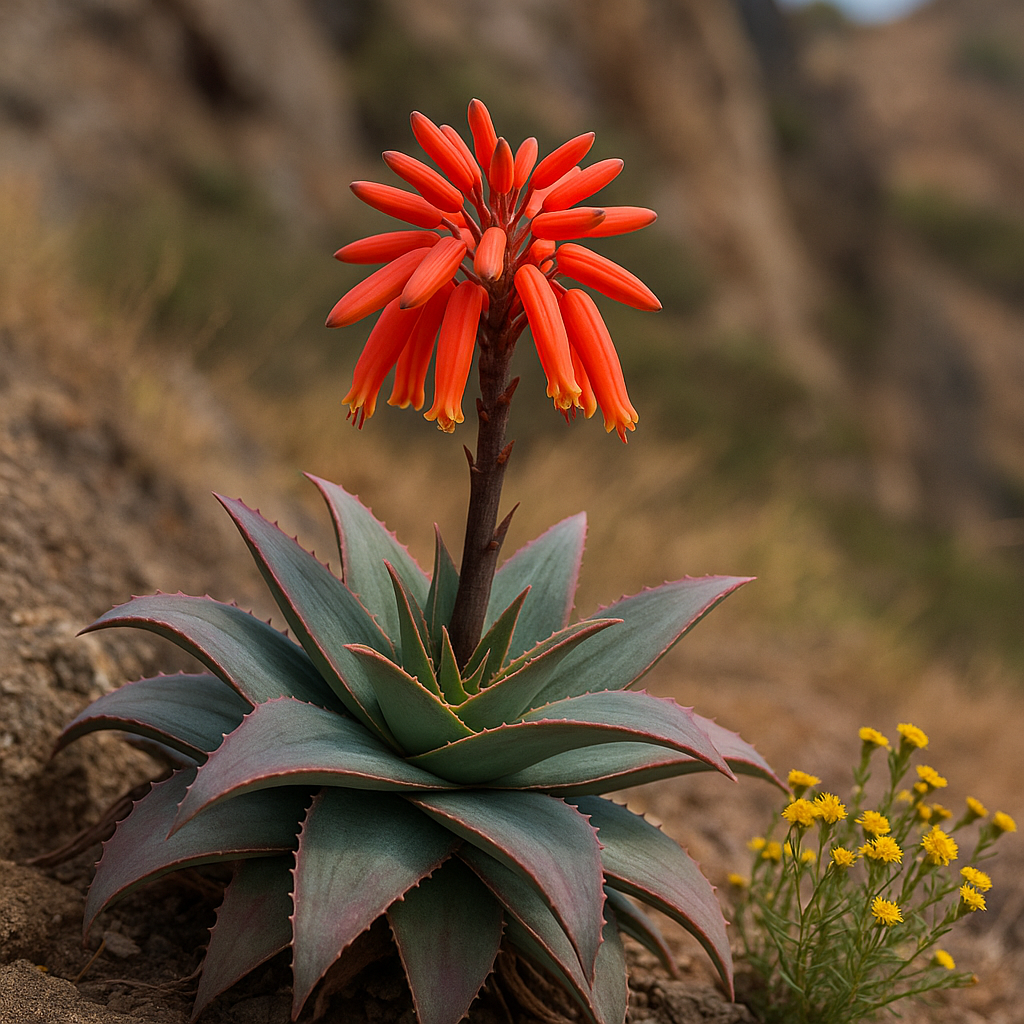
The plant forms a tight, architectural rosette to around 40–60 cm across, composed of broad, triangular leaves that taper elegantly to a point. The foliage is a cool blue-green to slate grey, often flushed with mauve or pink on the outer leaves in strong light, with a fine line of reddish teeth along the margins – exactly the look captured in our photographs. As the rosette matures it becomes slightly dome-shaped, with the lower leaves gently recurving, giving the plant a sculptural, almost agave-like presence on the rock face or in a raised bed or container.
In season, a slender, upright flower stalk rises from the centre of the rosette and carries clustered tubular blooms coloured warm coral-orange to red with softer yellowish tones towards the mouth. The inflorescences stand just above the leaves, attracting sunbirds and other pollinators. In South African cultivation Aloe ankoberensis typically flowers from late winter into spring under cool, bright conditions; in the northern hemisphere this usually corresponds to late summer into autumn in a glasshouse or bright patio setting.
For South African and international growers, Aloe ankoberensis is best cultivated in a very well-drained, rocky medium that mimics its cliff-side home – think coarse sand, gravel and a gritty succulent mix in a deep pot, trough, or rock-garden pocket. Provide full sun to bright light to bring out the blue-mauve tones and compact leaf form, but protect from severe frost or prolonged freezing temperatures. Water sparingly, allowing the medium to dry completely between waterings, especially in cooler months. Given the right conditions this Ethiopian cliff aloe becomes an unforgettable focal point, combining rarity, resilience and striking colour into one superb collector’s plant.


