
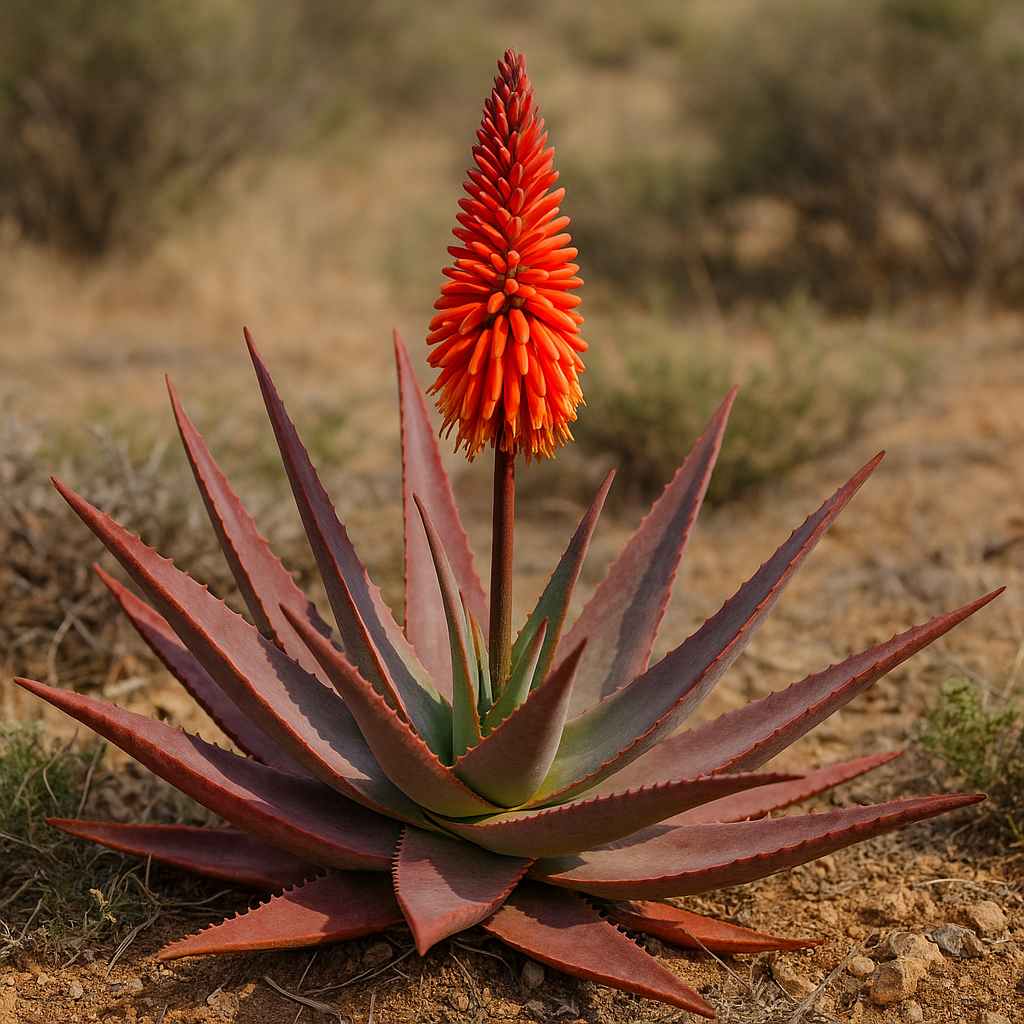
Aloe argentifolia – Silver-leaf Aloe – 5 Seed Pack
R225,00
INTERNATIONAL CUSTOMERS: Please read our shipping terms and conditions here before placing your order: Shipping Terms and Conditions
16 in stock
Aloe is one of the most captivating succulent genera on Earth, celebrated for its bold architectural rosettes, resilient nature, and spectacular seasonal flower displays. From neat, miniature species that tuck themselves into rocky crevices to dramatic, stem-forming giants that dominate dry hillsides, aloes bring an unmistakable sense of place—sunlit, water-wise, and wonderfully wild—wherever they are grown.
What truly sets Aloe apart is the combination of sculptural foliage and nectar-rich blooms. The leaves range from smooth and glaucous to spotted, toothed, and richly textured, often changing colour with sun, drought, or cool weather. When they flower, aloes send up striking spikes or branched candelabras topped with tubular blooms in fiery reds and oranges, soft corals and pinks, or even yellows and greens—magnets for pollinators and a highlight in any garden or collection.
With origins spanning Africa, Madagascar, the Arabian Peninsula and surrounding regions, Aloe has evolved to thrive in demanding environments—making many species naturally suited to xeriscaping, rock gardens, containers, and drought-tolerant landscapes. Whether you’re a first-time grower or a seasoned collector, raising aloes from seed is especially rewarding: every plant tells a slightly different story, and each one matures into a unique, living sculpture that becomes more impressive with every season.
Aloe argentifolia – Silver-leaf Aloe
Aloe argentifolia – the aptly named “Silver-leaf Aloe” – is a striking, medium-sized species for serious collectors and adventurous gardeners. Its name comes from the elegant, silvery bloom that dusts each long, narrow leaf, giving the rosette a frosted, metallic sheen. In good light the foliage shifts through soft blue-green to rich wine-red and plum tones, exactly like the plants shown in our photographs, with a neat rosette of arching, toothed leaves radiating from a short stem. Mature plants form broad, open rosettes that can reach 60–80 cm across, making a bold focal point in containers, rock gardens or arid beds.
When in flower, Aloe argentifolia becomes truly unforgettable. From the centre of the rosette rises a tall, sturdy stalk that carries one or more long, paddle-like racemes held almost horizontally. Each raceme is densely packed with dozens of closely set, tubular blooms in glowing scarlet to orange-red, the tips opening to reveal bright yellow stamens. The inflorescences match our images perfectly: a fiery, bottlebrush-like band of flowers perched just above the foliage. Flowering typically occurs in the cooler, drier months, from mid-winter into early spring in Southern Africa, and at a similar cool-season period in Mediterranean or warm-temperate climates, providing valuable nectar for sunbirds and other pollinators when little else is in bloom.
In nature, Aloe argentifolia is native to arid, rocky slopes and open scrub in dry East African regions, where it endures intense sun, heat and prolonged drought. This background makes it an excellent choice for South African water-wise gardens and for international growers in Mediterranean, subtropical and warm, frost-free climates. The silvered leaves are an adaptation to strong light and reflected heat, so the plant colours best in full sun and in poor, stony soils that mimic its natural habitat. In semi-shade the rosette stays greener and slightly more relaxed, but still keeps its clean, architectural form.
From seed, Aloe argentifolia is rewarding and not difficult if given the right conditions. Use a very well-drained, gritty mix with ample coarse sand or pumice, sow the seed on the surface and keep just lightly moist until germination. Seedlings quickly develop their characteristic narrow, toothed leaves and will begin to show their silvery bloom and pink blush as they mature in bright light. In colder regions, plants are best grown in pots that can be moved under cover during winter, where they will thrive on a sunny windowsill, in a glasshouse or under polycarbonate with minimal watering. For South African and international enthusiasts alike, this silver-leaf aloe offers a rare combination of dramatic foliage, spectacular flowering and genuine toughness – a collector’s piece that also performs beautifully in everyday gardens.


