
Aloe canarina – 5 Seed Pack
R225,00
INTERNATIONAL CUSTOMERS: Please read our shipping terms and conditions here before placing your order: Shipping Terms and Conditions
3 in stock
Aloe is one of the most captivating succulent genera on Earth, celebrated for its bold architectural rosettes, resilient nature, and spectacular seasonal flower displays. From neat, miniature species that tuck themselves into rocky crevices to dramatic, stem-forming giants that dominate dry hillsides, aloes bring an unmistakable sense of place—sunlit, water-wise, and wonderfully wild—wherever they are grown.
What truly sets Aloe apart is the combination of sculptural foliage and nectar-rich blooms. The leaves range from smooth and glaucous to spotted, toothed, and richly textured, often changing colour with sun, drought, or cool weather. When they flower, aloes send up striking spikes or branched candelabras topped with tubular blooms in fiery reds and oranges, soft corals and pinks, or even yellows and greens—magnets for pollinators and a highlight in any garden or collection.
With origins spanning Africa, Madagascar, the Arabian Peninsula and surrounding regions, Aloe has evolved to thrive in demanding environments—making many species naturally suited to xeriscaping, rock gardens, containers, and drought-tolerant landscapes. Whether you’re a first-time grower or a seasoned collector, raising aloes from seed is especially rewarding: every plant tells a slightly different story, and each one matures into a unique, living sculpture that becomes more impressive with every season.
Aloe canarina
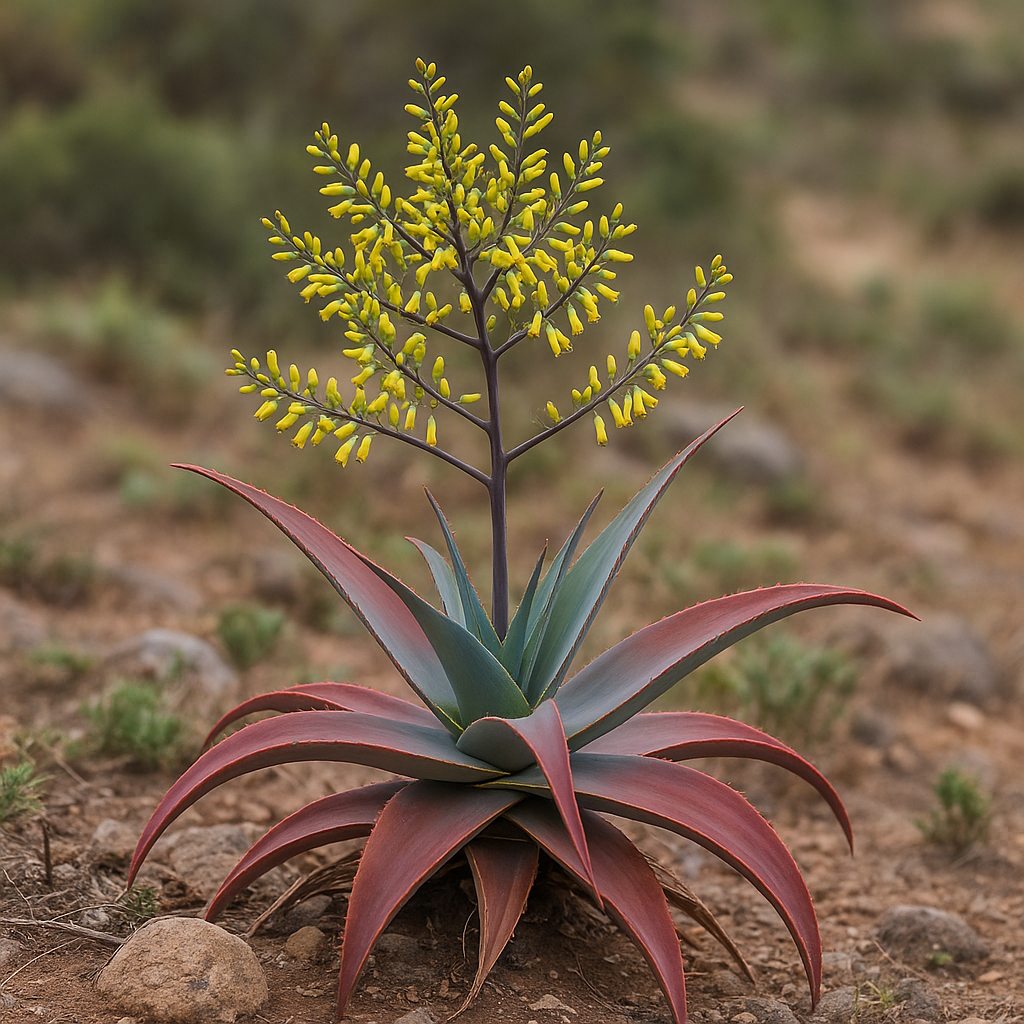
Aloe canarina is a striking, medium-sized aloe that brings a burst of golden light to any arid or water-wise planting. Forming a neat, upright rosette on a short stem, it carries long, slightly arching leaves that are rich green in good soil and flushed with bronze and red along the margins in strong sun or drier conditions. The leaves are smooth to the touch but lined with small, evenly spaced teeth, giving the plant a clean, architectural look that works beautifully in both naturalistic and contemporary gardens. In time, older plants can form impressive clumps, creating a bold focal point in the landscape.
In season, Aloe canarina explodes into flower with a forest of slender, dark stalks topped by dense heads of tubular blooms. The flowers are a luminous clear yellow with subtle greenish tips, packed tightly on each raceme so that the whole clump looks as if it has been smothered in golden candles. Flowering typically occurs from late winter into spring, when colour in dry gardens is often scarce. The nectar-rich blooms are highly attractive to sunbirds and other pollinators, making this aloe as valuable for wildlife as it is for its ornamental impact.
This species is believed to hail from rocky, sun-baked slopes in the drier parts of north-eastern Africa, Uganda and the Republic of South Sudan, where it grows in stony, well-drained soils with only seasonal rainfall. In cultivation it shows the same preferences: excellent drainage, plenty of sun and a regime of deep but infrequent watering. It thrives in Mediterranean, subtropical and warm, frost-free climates, and in cooler regions it can be kept in large containers that are moved under cover during severe cold. Plants are surprisingly tolerant of heat, wind and drought once established, making them perfect for South African water-wise gardens as well as dry gardens and xeriscapes worldwide.
Grown from seed, Aloe canarina develops a strong taproot and a natural, symmetrical form that is often superior to offset-grown plants. Give seedlings a gritty, free-draining mix and bright light from an early stage, increasing sun exposure as they mature. With a little patience, you’ll be rewarded with a robust, long-lived aloe that puts on a spectacular yellow display year after year. There are no well-established vernacular names or horticultural synonyms in common use; this plant is usually traded simply and proudly under its botanical name, Aloe canarina.


