
Aloe cheranganiensis – Cherangani Hills Aloe – 5 Seed Pack
R160,00
INTERNATIONAL CUSTOMERS: Please read our shipping terms and conditions here before placing your order: Shipping Terms and Conditions
5 in stock
Aloe is one of the most captivating succulent genera on Earth, celebrated for its bold architectural rosettes, resilient nature, and spectacular seasonal flower displays. From neat, miniature species that tuck themselves into rocky crevices to dramatic, stem-forming giants that dominate dry hillsides, aloes bring an unmistakable sense of place—sunlit, water-wise, and wonderfully wild—wherever they are grown.
What truly sets Aloe apart is the combination of sculptural foliage and nectar-rich blooms. The leaves range from smooth and glaucous to spotted, toothed, and richly textured, often changing colour with sun, drought, or cool weather. When they flower, aloes send up striking spikes or branched candelabras topped with tubular blooms in fiery reds and oranges, soft corals and pinks, or even yellows and greens—magnets for pollinators and a highlight in any garden or collection.
With origins spanning Africa, Madagascar, the Arabian Peninsula and surrounding regions, Aloe has evolved to thrive in demanding environments—making many species naturally suited to xeriscaping, rock gardens, containers, and drought-tolerant landscapes. Whether you’re a first-time grower or a seasoned collector, raising aloes from seed is especially rewarding: every plant tells a slightly different story, and each one matures into a unique, living sculpture that becomes more impressive with every season.
Aloe cheranganiensis – Cherangani Hills Aloe
Aloe cheranganiensis, commonly known as the Cherangani Hills Aloe, is a striking shrubby aloe from the highlands of northern Uganda and north-western Kenya, where it is especially associated with the Cherangani Hills.
Here it grows in dry scrub and open bushed grassland on rocky, sandy slopes between about 1 200 and 1 900 m, thriving in a seasonally dry tropical climate with cool nights and strong sun.
This tough, adaptable background makes it an excellent choice for water-wise gardens in South Africa as well as for collectors and landscape designers in warm, dry parts of the world who want dependable structure and dramatic winter colour.
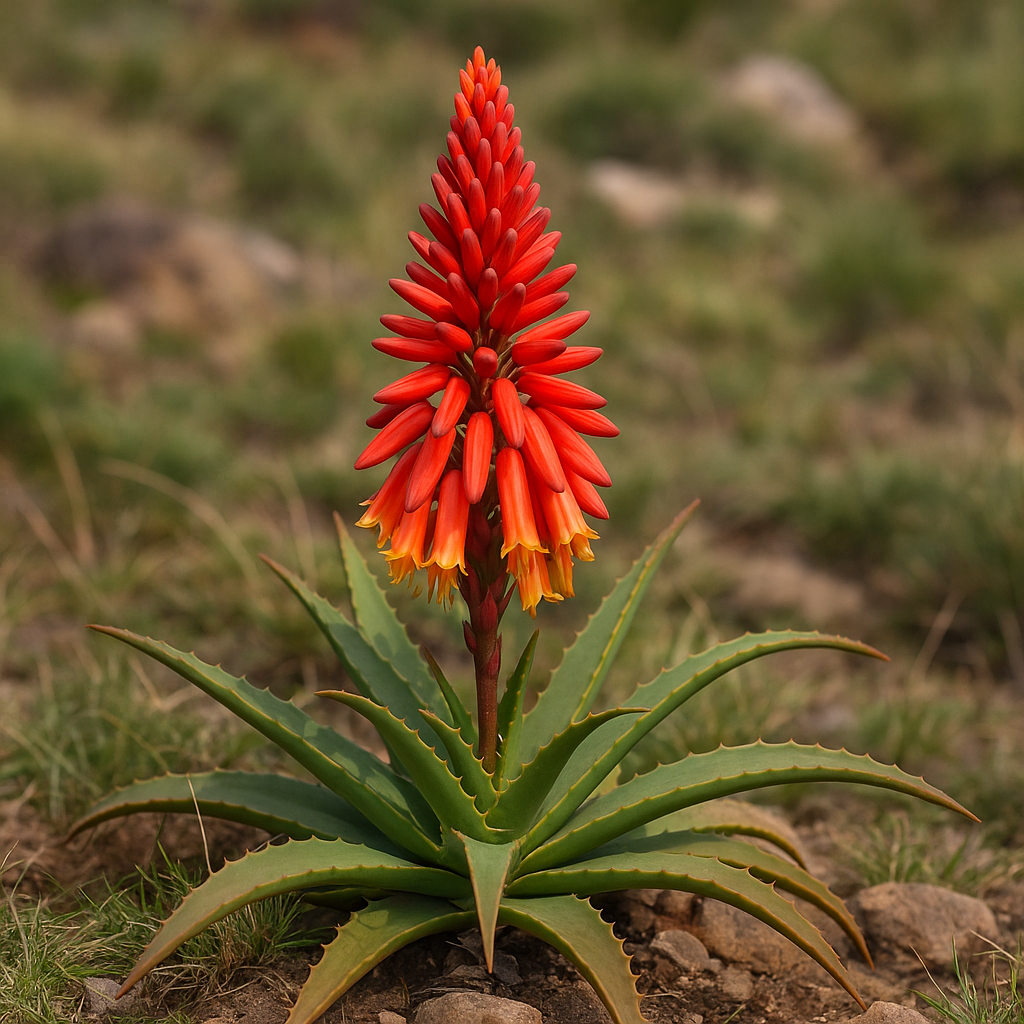
Young plants form neat, stemless rosettes like the one shown here, eventually elongating into short, shrubby clumps as the stems branch from the base and lean outward.
The leaves are narrow, pale- to mid-green and slightly channelled, spreading gracefully before curving down to the ground. Along the margins runs a clean line of small, evenly spaced teeth that take on a warm golden to copper tinge in bright light, giving the rosette a crisp outline against natural stone and gravel. In full sun the foliage may flush with a soft bronze blush, while in lighter shade it remains a clear, fresh green – either way retaining the sleek, uncluttered look that makes this species so versatile in mixed succulent plantings and rock-garden schemes.
Aloe cheranganiensis is best known for its dense, conical flower spikes, which appear in mid- to late autumn and early winter.
Each sturdy inflorescence carries a tightly packed raceme of tubular flowers: upper buds glowing vivid red to red-pink, opening from the base into soft yellow to yellow-orange bells so that the spike is crowned in fiery tones and finished below with a bright golden fringe. The flowers are nectar-rich and highly attractive to sunbirds and a wide range of pollinating insects, making this aloe as valuable for wildlife as it is for colour in the cool season.
For South African gardeners, Cherangani Hills Aloe performs beautifully in sunny, well-drained rockeries, embankments and gravel gardens, where its drought tolerance and winter display can really shine. International growers in Mediterranean, subtropical and warm temperate climates will find it equally easy, provided it is given a gritty, free-draining soil, full sun or very bright light and a regime of thorough watering during the warm growing season followed by a much drier rest in winter. It has a reputation for being relatively fast-growing and fairly cold-tolerant for an East African aloe, coping with light frost if kept on the dry side.
Seed-grown plants develop quickly into robust rosettes and, in just a few seasons under good care, reward the grower with show-stopping spires of red-and-gold flowers that light up the dry garden and container display alike.


