
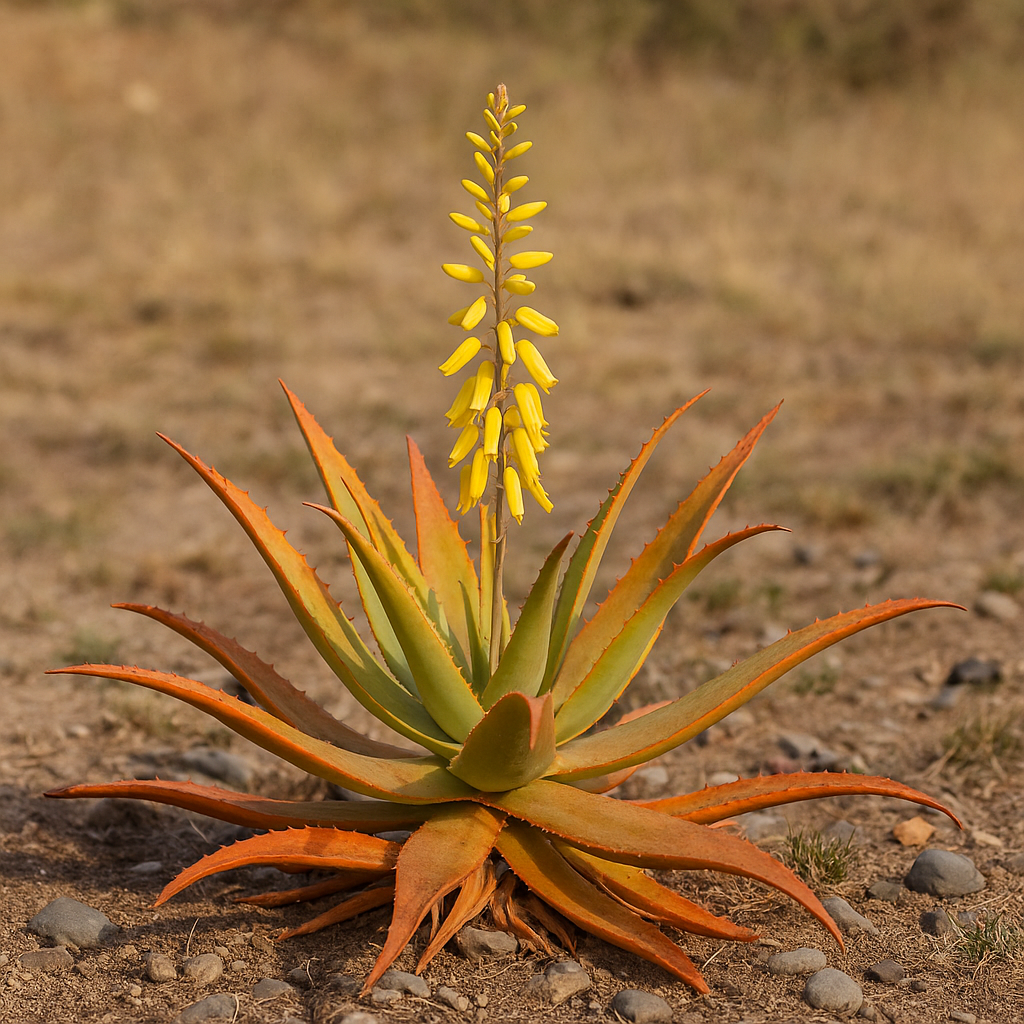
Aloe hildebrandtii (Aloe gloveri) – 5 Seed Pack
R185,00
INTERNATIONAL CUSTOMERS: Please read our shipping terms and conditions here before placing your order: Shipping Terms and Conditions
5 in stock
Aloe is one of the most captivating succulent genera on Earth, celebrated for its bold architectural rosettes, resilient nature, and spectacular seasonal flower displays. From neat, miniature species that tuck themselves into rocky crevices to dramatic, stem-forming giants that dominate dry hillsides, aloes bring an unmistakable sense of place—sunlit, water-wise, and wonderfully wild—wherever they are grown.
What truly sets Aloe apart is the combination of sculptural foliage and nectar-rich blooms. The leaves range from smooth and glaucous to spotted, toothed, and richly textured, often changing colour with sun, drought, or cool weather. When they flower, aloes send up striking spikes or branched candelabras topped with tubular blooms in fiery reds and oranges, soft corals and pinks, or even yellows and greens—magnets for pollinators and a highlight in any garden or collection.
With origins spanning Africa, Madagascar, the Arabian Peninsula and surrounding regions, Aloe has evolved to thrive in demanding environments—making many species naturally suited to xeriscaping, rock gardens, containers, and drought-tolerant landscapes. Whether you’re a first-time grower or a seasoned collector, raising aloes from seed is especially rewarding: every plant tells a slightly different story, and each one matures into a unique, living sculpture that becomes more impressive with every season.
Aloe hildebrandtii (Aloe gloveri)
Aloe hildebrandtii is a distinctive, dryland aloe with a tough, habitat-grown look—an architectural rosette that sits low to the ground in gritty, stony soils and brings a clean, spined silhouette to rock gardens, xeriscapes and collector beds. It’s especially appealing to growers who love aloes with warm-toned margins, because the narrow, tapering leaves can develop sun-kissed orange to rust flushes along the edges while staying fresh green through the centre—exactly the kind of contrast that makes a single plant read as a “natural focal point.”
This species is native to northern Somalia in the Horn of Africa, where it occurs in arid, desert to dry shrubland conditions—an origin that explains its preference for bright light, sharp drainage and lean, mineral soils.
In cultivation it’s also encountered under the synonym Aloe gloveri, which you may see on older labels or in historic collections.
In form, Aloe hildebrandtii is best described as a succulent subshrub: mature plants can develop a low, sprawling, multi-rosette habit over time, but younger plants often present as a single, starry rosette with long, slim leaves and crisp marginal teeth. The overall effect is elegant rather than bulky—clean lines, purposeful armature, and a poised, ground-rooted stance that looks completely at home in dry, rocky landscapes.
Flowering is a standout feature: slender stems carry open racemes of tubular blooms in clear yellow, sometimes with greenish tips, and populations are known to vary into softer orange or duller red shades—though the classic look is bright, sunlit yellow. Flowering can be extended in mild climates, and is often reported across a long season rather than a brief burst, making it a rewarding plant for gardeners who want colour over time.
From seed, this aloe is a satisfying grower’s project: sow onto a sterile, very free-draining mix, keep lightly moist and warm until germination, and then shift seedlings gradually into brighter light as they strengthen. Once established, treat it like a true arid-land aloe—deep but infrequent watering during active growth, minimal winter moisture, and protection from hard frost for international growers in colder regions.


