
Aloe officinalis – 5 Seed Pack
R280,00
INTERNATIONAL CUSTOMERS: Please read our shipping terms and conditions here before placing your order: Shipping Terms and Conditions
5 in stock
Aloe is one of the most captivating succulent genera on Earth, celebrated for its bold architectural rosettes, resilient nature, and spectacular seasonal flower displays. From neat, miniature species that tuck themselves into rocky crevices to dramatic, stem-forming giants that dominate dry hillsides, aloes bring an unmistakable sense of place – sunlit, water-wise, and wonderfully wild – wherever they are grown.
What truly sets Aloe apart is the combination of sculptural foliage and nectar-rich blooms. The leaves range from smooth and glaucous to spotted, toothed, and richly textured, often changing colour with sun, drought, or cool weather. When they flower, aloes send up striking spikes or branched candelabras topped with tubular blooms in fiery reds and oranges, soft corals and pinks, or even yellows and greens – magnets for pollinators and a highlight in any garden or collection.
With origins spanning Africa, Madagascar, the Arabian Peninsula and surrounding regions, Aloe has evolved to thrive in demanding environments – making many species naturally suited to xeriscaping, rock gardens, containers, and drought-tolerant landscapes. Whether you’re a first-time grower or a seasoned collector, raising aloes from seed is especially rewarding: every plant tells a slightly different story, and each one matures into a unique, living sculpture that becomes more impressive with every season.
Aloe officinalis
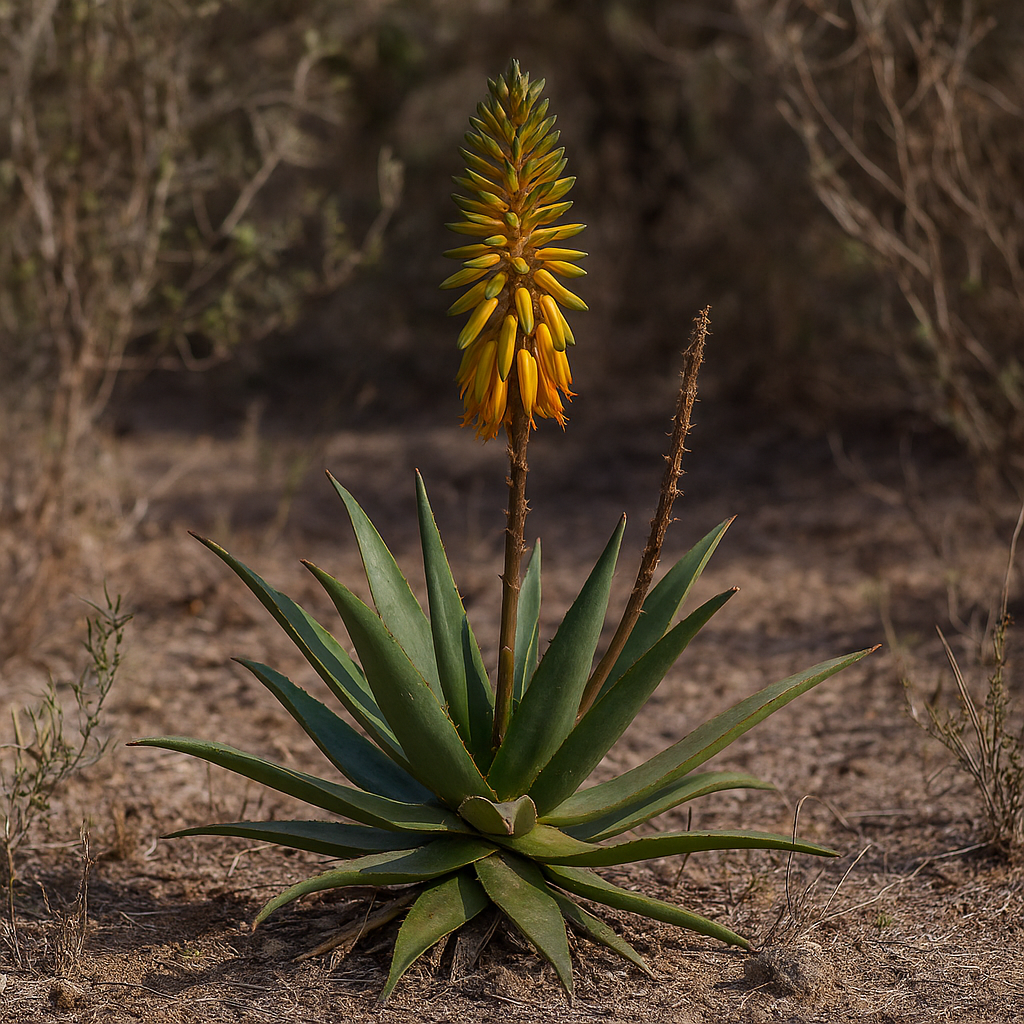
Aloe officinalis is an arresting, sculptural Somalian aloe with a clean, starburst rosette that looks purpose-built for rock gardens, collectors’ beds, and crisp modern containers. Even out of flower it has a strong architectural presence, with narrow, tapering leaves held in a tidy spiral that reads as both wild and refined. In season, it becomes a real showpiece, sending up a bold, upright flower spike that lifts colour well above the foliage and draws immediate attention.
The plant forms a low, solitary to lightly clumping rosette of firm, matte deep-green leaves, each leaf long and lance-shaped with discreet marginal teeth and a sharp, elegant point. The inflorescence is tall and slender with a dense raceme of tubular blooms in warm golden-orange to orange-yellow tones, creating a glowing “torch” effect against the muted greens of the surrounding habitat. These nectar-rich flowers are well suited to bird and insect pollinators, making the plant as lively as it is ornamental.
In cultivation, Aloe officinalis is associated with dry, rocky, well-drained landscapes and performs best where water never lingers around the roots—think stony slopes, open scrub, and sunlit ground with plenty of airflow. While its name reflects an old “apothecary/medicinal” tradition (officinalis), this is a plant prized today for its garden toughness and striking floral display. Flowering is typically in the cooler season into early spring under many climates, though timing can shift with local conditions and rainfall patterns.
Seed-grown plants reward patience with natural variation and vigorous, climate-adapted specimens—ideal for South African growers seeking hardy landscape aloes, and for international collectors wanting something distinctive for bright patios, greenhouses, or xeric plantings. Sow seed on a gritty, free-draining medium, keep lightly moist (never soggy) in bright light, and expect the first true aloe leaves to show quickly when warmth is steady. Given sun, drainage, and sensible watering, this aloe matures into a long-lived, drought-tolerant feature plant with a flowering spike that’s worth the wait.


