
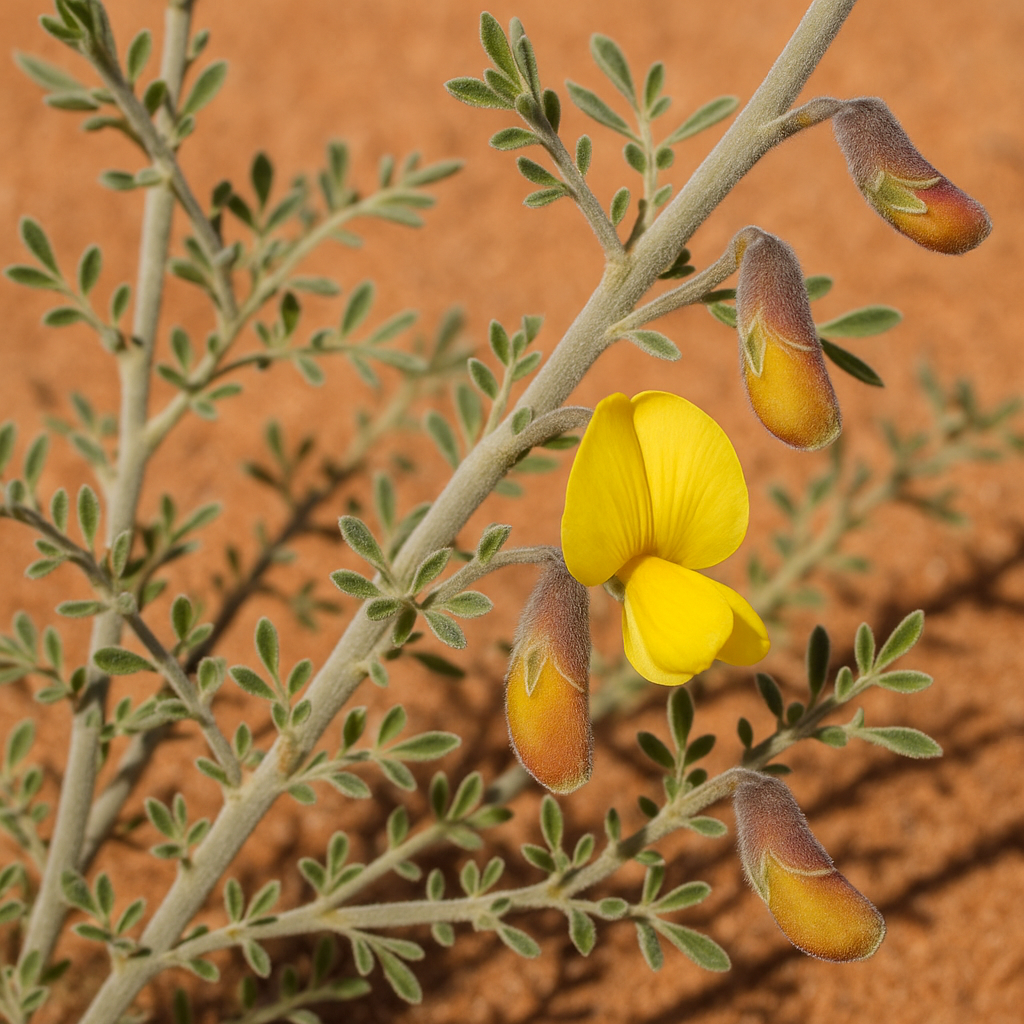
Calobota cinerea (Lebeckia cinerea) – Karoo Gannabush – 5 Seed Pack
R22,50
INTERNATIONAL CUSTOMERS: Please read our shipping terms and conditions here before placing your order: Shipping Terms and Conditions
6 in stock
Calobota is a small, Cape-centred group of legumes in the pea family (Fabaceae), made famous when DNA and morphological studies showed that the old, catch-all genus Lebeckia wasn’t a natural group. In 2009 botanists reinstated Calobota to house about 16 of those species (along with some formerly in Spartidium), giving this distinctive lineage its own name again. Most Calobota are tough, drought-ready shrubs of fynbos, renosterveld and the fringes of the Karoo, thriving on sandy or stony, well-drained soils and often along river courses and slopes. Many bear sweet-scented, bright yellow “pea” flowers that draw solitary bees and other pollinators—classic Cape flora adapted to winter-rainfall rhythms. Although centred in South Africa, the genus as a whole ranges across parts of southern to North Africa and is currently recognised as an accepted genus in modern checklists. Think of Calobota as the elegant, water-wise cousins of our veld—nitrogen-fixing shrubs that stitch fertility back into poor soils while lighting up winter and spring with sunny blooms.
Calobota cinerea, commonly known as Karoo Gannabush and synonymously known as Lebeckia cinerea, is a South African indigenous sub-shrub found in the Western Cape and Northern Cape, extending into Namibia. From late winter to early spring, it produces striking yellow pea-shaped flowers that attract pollinators to the garden.


