
Chlorophytum viscosum – Sticky Green Lily – 5 Seed Pack
R27,25
INTERNATIONAL CUSTOMERS: Please read our shipping terms and conditions here before placing your order: Shipping Terms and Conditions
21 in stock
The genus Chlorophytum is best known to most people through the humble “spider plant” (Chlorophytum comosum), but behind that familiar house-plant lies a wonderfully diverse group of over 200 species spread across Africa, Madagascar, the Middle East and the Indian subcontinent. These are mainly tufted, perennial herbs with fleshy or tuberous roots and elegant, grass- to strap-shaped leaves. Their real magic appears in season, when airy stems rise above the foliage carrying dozens of starry white flowers that open in succession, creating a soft, sparkling cloud of bloom.
Many species are native to southern Africa, where they occur from fynbos and Namaqualand quartz flats to misty Drakensberg grasslands and shady forest margins. They are typically tough, water-wise plants adapted to summer rainfall rhythms or winter-rainfall droughts, storing reserves in their roots and retreating quietly underground when conditions are harsh. This makes them ideal candidates for South African gardens that must cope with heat, erratic rains and water restrictions, while still offering long flowering displays and food for bees, butterflies and other pollinators.
For seed growers and collectors, Chlorophytum offers an exciting palette: compact rosettes with crisped leaf margins, cliff-hangers with long arching leaves, miniature grass-like species for rock gardens, and robust clumps for borders and naturalistic plantings. Most are easy from seed, rewarding patient growers with flowers within a couple of seasons. The listings below focus on South African and neighbouring species, offering you a chance to grow your own wild “star-flowers” from regions as varied as Namaqualand, the Karoo and the high-lying grasslands.
Chlorophytum viscosum – Sticky Green Lily
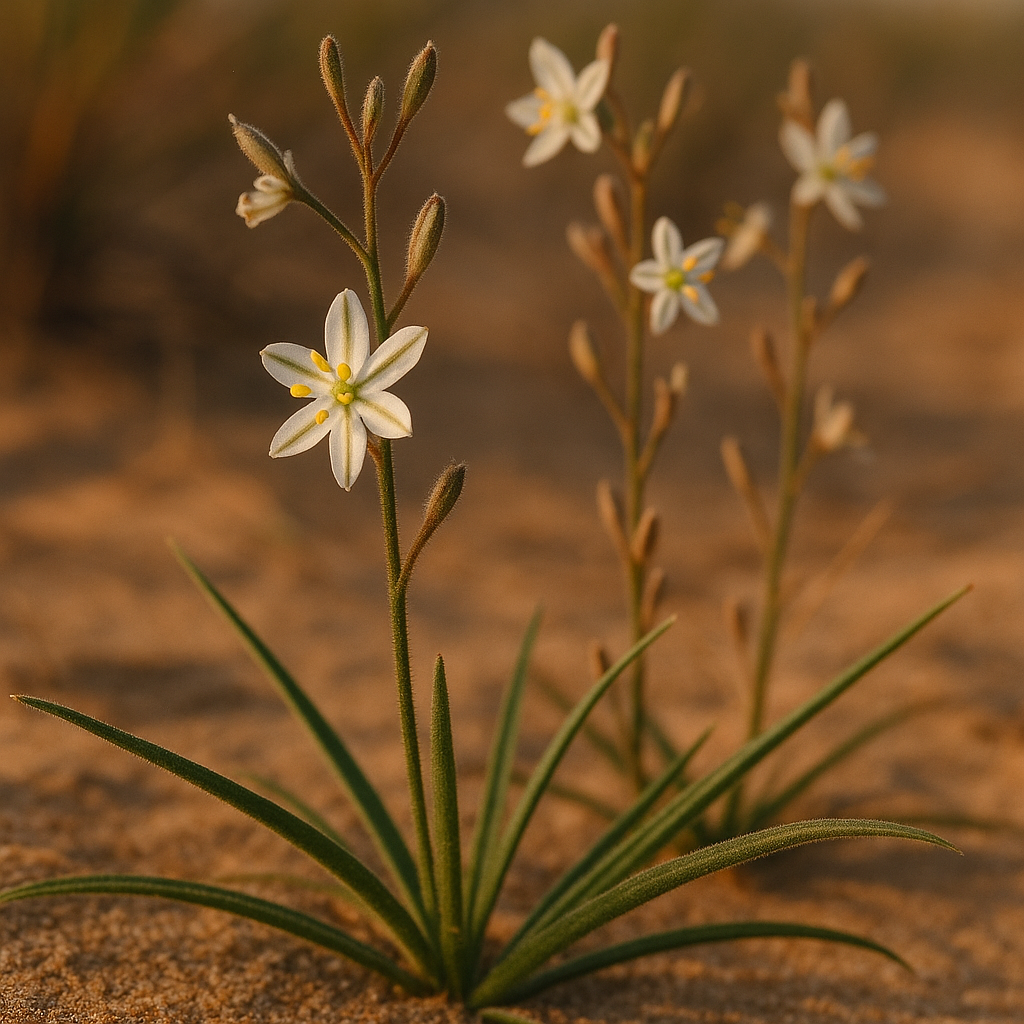
Chlorophytum viscosum is distinguished by sticky (viscous) glandular hairs on parts of the plant, which may trap fine debris and give stems and buds a slightly tacky feel. This adaptation likely helps deter small herbivores or reduce moisture loss. For gardeners, it adds an intriguing textural twist to the usual Chlorophytum charm.
Plants form tufts or rosettes of narrow leaves, and produce wiry flower stems carrying many small star-flowers. The white blooms with yellow anthers are attractive to insects, and the glandular stems occasionally glisten in the sun. Flowering is generally during the warmer, wetter months, much like other summer-rainfall species.
In the garden, C. viscosum can be used in naturalistic plantings, insect-friendly borders and collector’s beds. It prefers full sun to light shade and well-drained soil, with regular but not excessive summer watering. Seed is the best propagation method and will give you the full range of subtle variations in stickiness and stature within the species, allowing you to select your favourite forms for further planting.


