
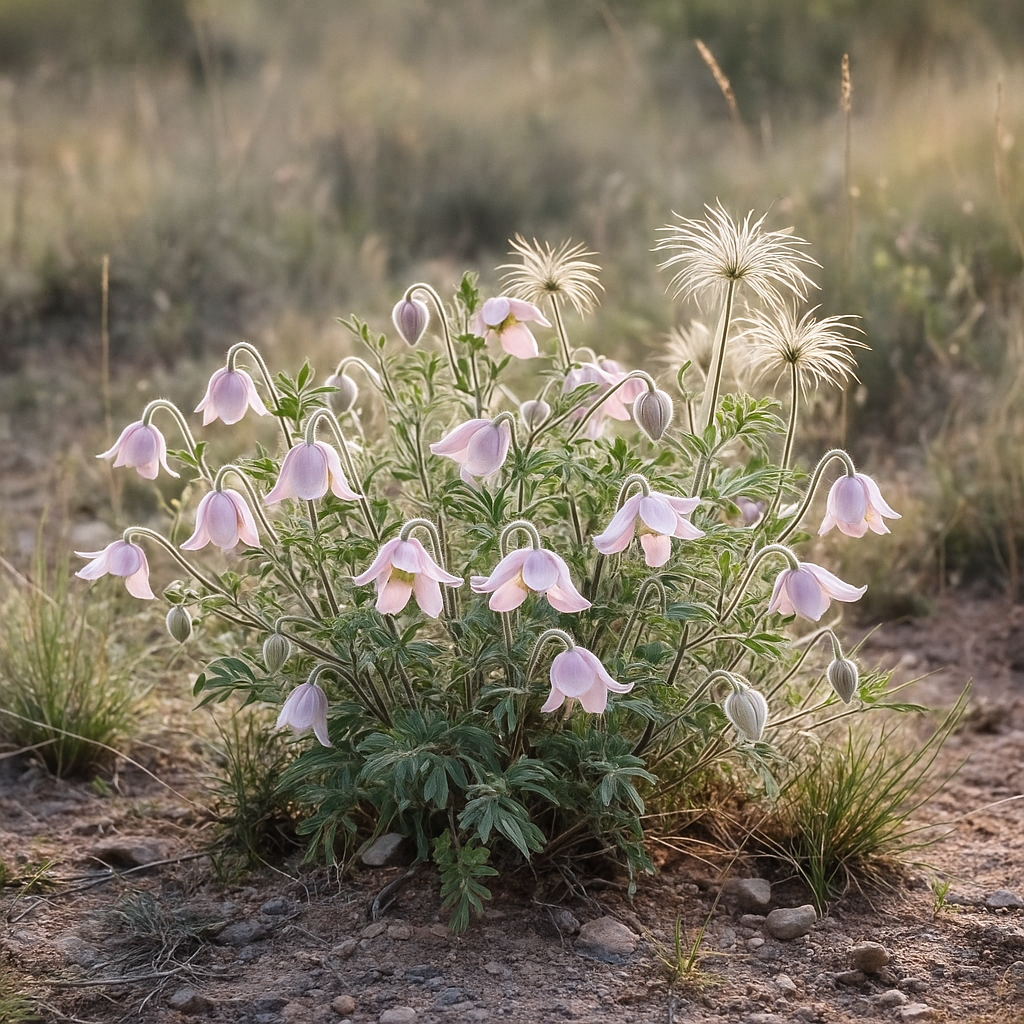
Clematis villosa – Shock-headed Peter – 5 Seed Pack
R25,00
INTERNATIONAL CUSTOMERS: Please read our shipping terms and conditions here before placing your order: Shipping Terms and Conditions
17 in stock
Clematis is the quiet show-off of the buttercup family, Ranunculaceae: a genus of roughly 300–350 species of mostly twining vines and shrublets found across the temperate world, with just a handful naturally occurring in southern Africa.
From delicate climbers that lace through shrubs, to free-standing “feather duster” bushes crowned in silky seedheads, Clematis combines toughness with a very elegant, almost romantic look. Many species are valued globally for their ornamental flowers and their decorative, feathery fruits, and several have a long history of traditional medicinal use in Africa and Asia.
Our indigenous Clematis – including Clematis brachiata, C. hirsuta and C. villosa – are perfectly adapted to South Africa’s summer-rainfall climates. They cope with heat, wind, frost and poor soils, yet still manage to smother themselves in blooms and shimmering seed tails that catch the light like spun silver.
For the gardener or smallholder who loves naturalistic plantings, they are ideal for softening fences and wires, spilling over rocks, colonising sunny slopes and tying together shrubs and grasses into a single, airy tapestry.
Clematis do best when their roots are kept cool and shaded while their stems can reach into the sun – the classic “feet in the shade, head in the sun” recipe.
Grown from seed, they reward patience with long-lived, characterful plants that feel authentically wild and uniquely African, yet look refined enough for any town garden or modern landscape.
Clematis villosa – Shock-headed Peter
Clematis villosa is a shrubby, non-climbing member of the genus, native to Austral Africa and particularly characteristic of South Africa’s grassland and bushveld regions. It occurs in Botswana, Namibia and widely in the northern provinces of South Africa, especially Gauteng, Limpopo, Mpumalanga and North West, typically on sandy slopes, rocky outcrops and open grassland.
In the past it has also been treated under the separate genus Clematopsis, and older books sometimes refer to it under that name. Common names shared across C. villosa and its subspecies include feather duster and pluimbossie or veerbossie, referring to the distinctive plumed seedheads.
This is a deciduous shrublet, usually around 0.5–1 m tall, regenerating each year from a woody rootstock that allows it to survive frost, drought and even occasional grass fires. The stems and deeply divided, bipinnate leaves are clothed in fine grey-silvery hairs, giving the plant a soft, feathery texture. In spring and early summer, the new growth flushes with light, ferny foliage, followed by striking, nodding flowers in shades of soft pink to mauve, sometimes creamy, each with four petal-like sepals and a slightly wild, tousled look.
As the season progresses, the flowers give way to upright, silvery-white fruiting heads – clusters of achenes each bearing a long, silky, feathery tail that catches the light and justifies the “feather duster” and “plume bush” names.
For South African gardens, C. villosa is a superb choice for hot, dry beds, rocky terraces and grassland or veld-style plantings where a 1 m shrub can be allowed to mingle with grasses and perennials. It thrives in poor, sandy or loamy soils with good drainage and plenty of sun, and is remarkably hardy once established. Sown from seed, plants may take a season or two to reach flowering size, and seeds can be slow and erratic to germinate, but the reward is a long-lived, water-wise shrub that puts on a wonderful show of pendulous flowers followed by an unforgettable display of pale, feathery plumes.


