
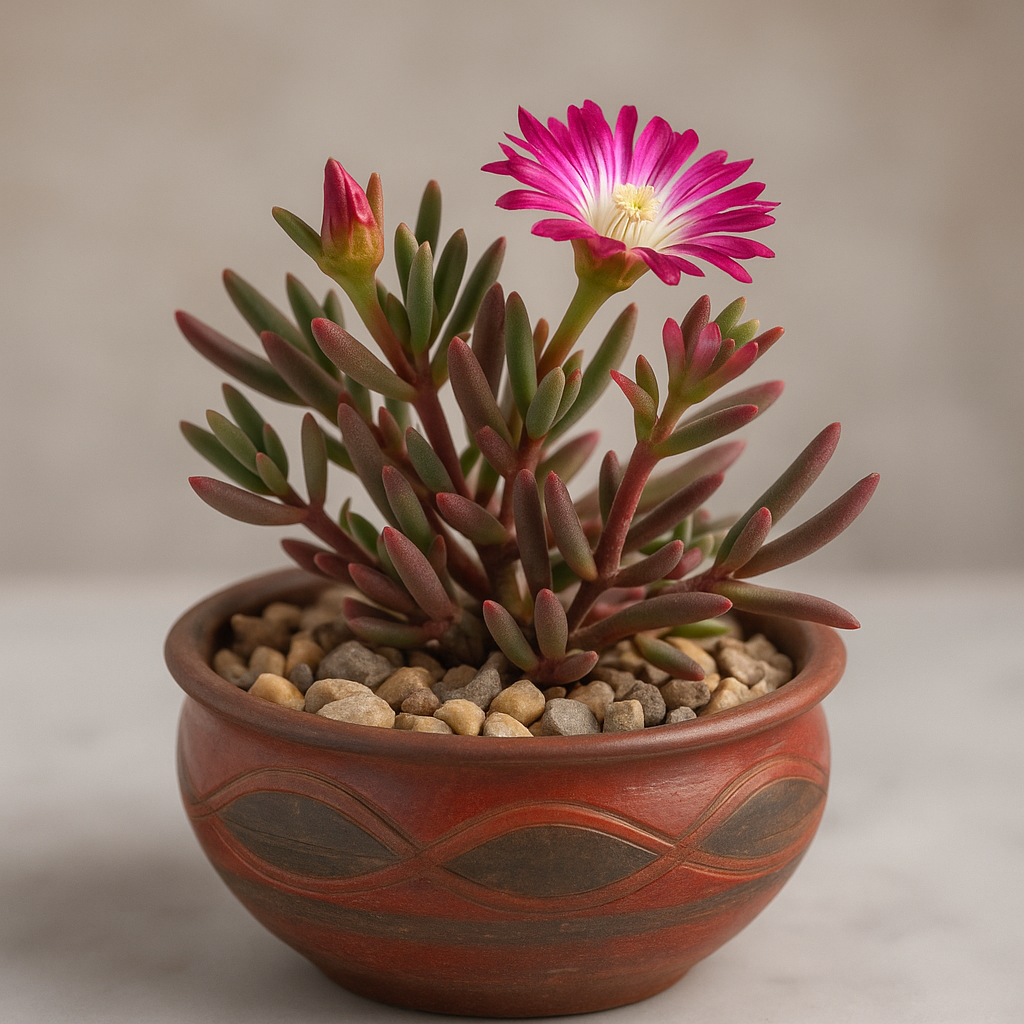
Delosperma inaequale – 5 Seed Pack
R23,50
INTERNATIONAL CUSTOMERS: Please read our shipping terms and conditions here before placing your order: Shipping Terms and Conditions
2 in stock
If you love vygies and waterwise gardening, Delosperma is one of those genera that quickly becomes addictive. These are mostly low, mat-forming succulents in the Aizoaceae, famous for their shimmering “ice” cells on the leaves and stems that catch the light like tiny crystals – a clever way of reflecting harsh African sun while storing precious moisture.
The genus is centred in southern Africa, with the bulk of species in South Africa and Lesotho, but stretching north into eastern Africa as far as Ethiopia and even into the Arabian Peninsula. Many are local endemics tied to specific rock types or mountain systems – from arid Karoo flats and grassland dolerite outcrops to subalpine Drakensberg cliffs. Seed capsules are typically hygrochastic: they open when wet, using little “valves” and wings to present or flick out the seed in rain – exactly the kind of detail that makes them fascinating subjects for a seed-focused collector.
In the garden, Delosperma species are valued for their carpets of daisy-like flowers in intense shades of magenta, pink, purple, yellow and orange, often over a very long season. Given full sun and sharply drained, sandy or gravelly soils, many species are remarkably drought tolerant and need little more than occasional watering once established. They are ideal for rockeries, retaining walls, containers, green roofs and banks where a tough, colourful, pollinator-friendly groundcover is needed.
For a succulent enthusiast in South Africa, Delosperma offers a huge palette of local biodiversity – from tiny, niche endemics to showy garden workhorses – all fitting neatly into the broader push toward waterwise, climate-resilient gardening.
Delosperma inaequale
Delosperma inaequale is a South African succulent occurring mainly in the Eastern Cape, where it grows on rocky slopes, shallow-soil ledges and seasonal seepage lines. Its name means “unequal,” likely referring to subtle variations in leaf shape or floral structure compared to its close relatives. Plants form low mats or loose cushions of fleshy leaves that hug the contours of rocks, helping them survive alternating periods of summer rain and winter dryness.
In flower, the species produces daisy-like blooms typical of the genus, opening widely in sunshine and folding during cool or cloudy spells. Colours vary between populations but remain within the familiar Delosperma spectrum of pinks, magentas and warm tones. The flowers sit neatly above the tidy foliage, creating an attractive, airy display without overpowering nearby plants.
For South African gardeners, D. inaequale is a tough, adaptable choice for rockeries, gravel paths and containers. It performs especially well in Eastern Cape–style plantings with lean, gritty soil and full sun. From seed it is straightforward: surface-sow the dustlike seed, mist gently and keep in bright, filtered light until germination. Once established, it becomes a hardworking, drought-tolerant groundcover ideal for waterwise gardens.


