
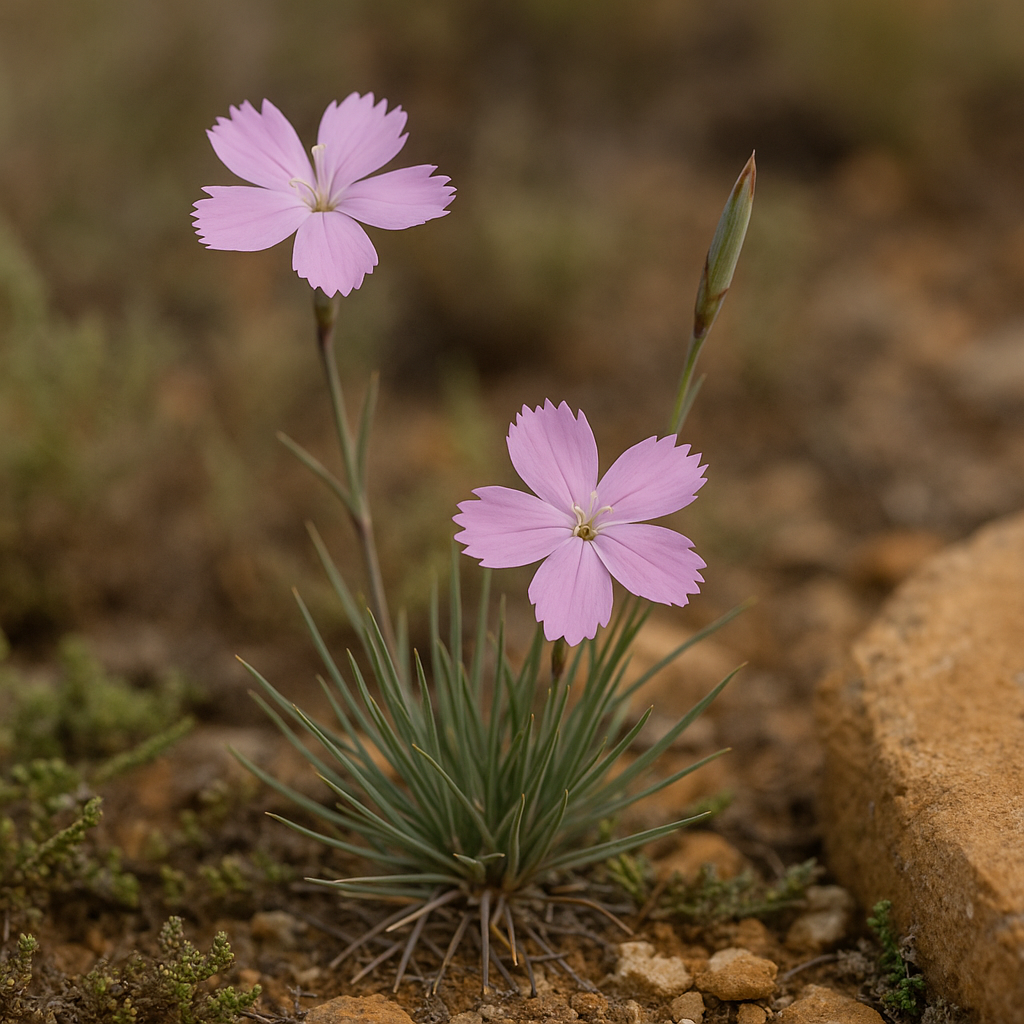
Dianthus thunbergii f. thunbergii – 10 Seed Pack
R29,50
INTERNATIONAL CUSTOMERS: Please read our shipping terms and conditions here before placing your order: Shipping Terms and Conditions
40 in stock
The genus Dianthus – the famous “pinks” and “wild carnations” – brings together some of the toughest and most enchanting perennials you can add to a garden. From wind-scoured Drakensberg escarpments to misty Highveld grasslands and Cape sandstone slopes, southern African Dianthus species have evolved to cope with cold, wind, summer thunderstorms and long winter dry spells. In return they offer clouds of delicate, star-shaped flowers in shades of white, blush and vivid pink, often deliciously scented and loved by bees, butterflies and other pollinators.
Unlike their big florist cousins, these species remain neat, compact and easy to place. Most form small, evergreen clumps or cushions of narrow, often blue-green leaves that sit low against the soil, sending up wiry flowering stems in spring and summer. They are ideal for rock gardens, gravel beds, retaining walls, containers and any sunny, well-drained corner where waterwise, cold-tolerant plants are needed. Once established they ask for very little, yet reward you year after year.
For South African gardeners and collectors, the local Dianthus species are especially appealing: they are indigenous, tough, and perfectly adapted to our climate. Whether you garden on the frosty Highveld, in the Drakensberg, Namaqualand or the winter-rainfall Cape, there is a wild pink that will feel completely at home and bring a touch of alpine elegance to your beds and containers.
Dianthus thunbergii f. thunbergii
The typical form of Dianthus thunbergii highlights all the best features of the species. Plants form dense tufts of fine, grey-green leaves and send up many slender stems, each tipped with a flat, five-petalled flower. Petal margins are neatly toothed, giving a crisp finish, and colours range from soft to medium rose-pink.
In nature this form occurs in high-rainfall grasslands and rocky slopes, often among shrubs and restios. It flowers freely in the height of summer, providing nectar for small insects and adding splashes of pink among the grasses. Because of its refined, tidy habit it lends itself very well to garden use.
Grow f. thunbergii in sunny to lightly filtered positions with well-drained soil that does not remain waterlogged in winter. It is frost hardy and suitable for many parts of South Africa, from the cooler coastal mountains to the Highveld. Use it to edge pathways, fill pockets in stone walls or soften the edges of rockeries, where its intricate flowers can be enjoyed at close range.


