
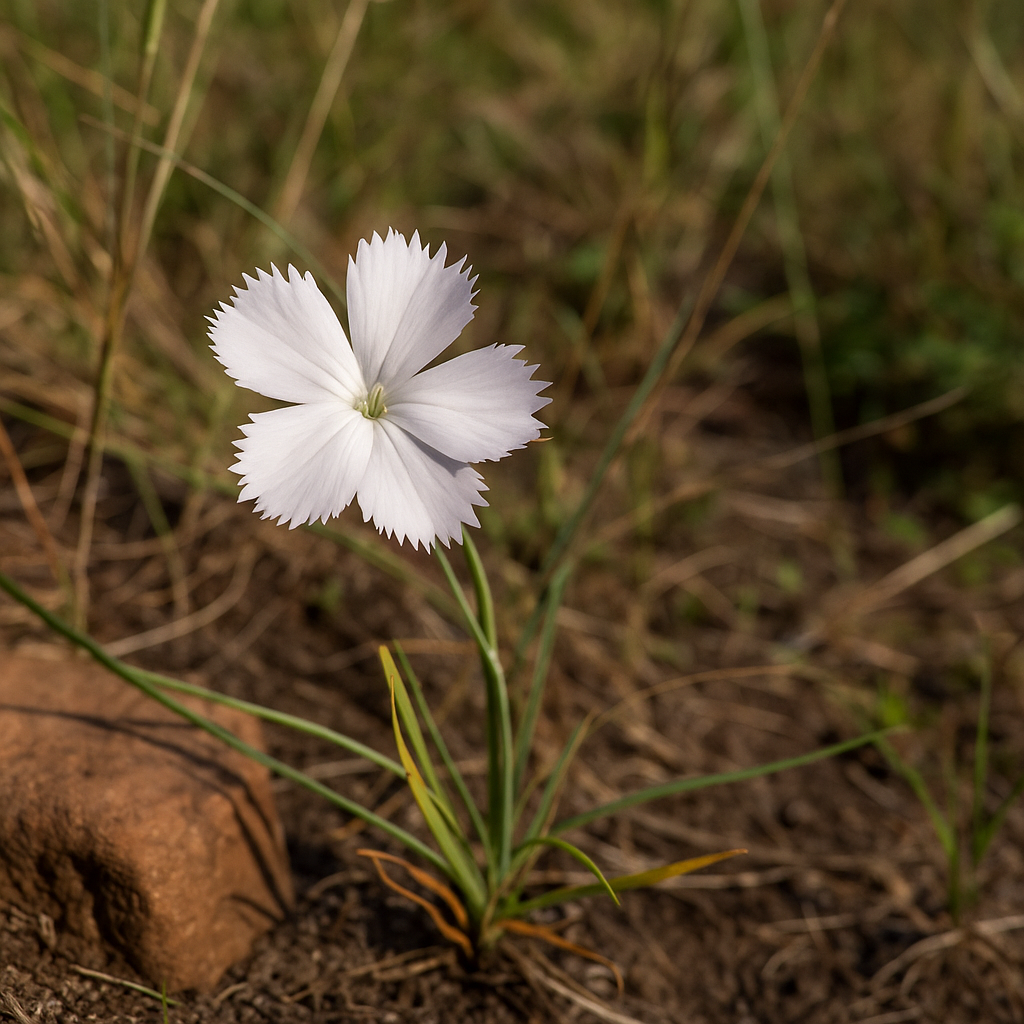
Dianthus zeyheri ssp. natalensis – Grass Pink, Grass Carnation – 10 Seed Pack
R29,50
INTERNATIONAL CUSTOMERS: Please read our shipping terms and conditions here before placing your order: Shipping Terms and Conditions
36 in stock
The genus Dianthus – the famous “pinks” and “wild carnations” – brings together some of the toughest and most enchanting perennials you can add to a garden. From wind-scoured Drakensberg escarpments to misty Highveld grasslands and Cape sandstone slopes, southern African Dianthus species have evolved to cope with cold, wind, summer thunderstorms and long winter dry spells. In return they offer clouds of delicate, star-shaped flowers in shades of white, blush and vivid pink, often deliciously scented and loved by bees, butterflies and other pollinators.
Unlike their big florist cousins, these species remain neat, compact and easy to place. Most form small, evergreen clumps or cushions of narrow, often blue-green leaves that sit low against the soil, sending up wiry flowering stems in spring and summer. They are ideal for rock gardens, gravel beds, retaining walls, containers and any sunny, well-drained corner where waterwise, cold-tolerant plants are needed. Once established they ask for very little, yet reward you year after year.
For South African gardeners and collectors, the local Dianthus species are especially appealing: they are indigenous, tough, and perfectly adapted to our climate. Whether you garden on the frosty Highveld, in the Drakensberg, Namaqualand or the winter-rainfall Cape, there is a wild pink that will feel completely at home and bring a touch of alpine elegance to your beds and containers.
Dianthus zeyheri ssp. natalensis – Grass Pink, Grass Carnation
Subspecies natalensis is generally associated with KwaZulu-Natal and adjacent eastern regions, often at somewhat lower altitudes than the typical subspecies. Plants may be slightly more slender and more free-branching, weaving gracefully among grasses and other meadow plants. The foliage remains narrow and linear, forming modest tufts at ground level.
The flowers are usually soft pink to light rose, a touch paler than in many forms of the typical subspecies, with neatly fringed petals and a delicate, airy look. Flowering occurs in summer, coinciding with the peak of the eastern summer rainfall season. In full bloom, a colony of plants can create a soft haze of pink over a moist grassland hollow or gentle hillside.
In cultivation, ssp. natalensis appreciates slightly deeper, more moisture-retentive soils than some of the rock-garden dianthus species, provided drainage remains good. It is excellent for naturalistic Highveld and KwaZulu-Natal meadows, pond edges with well-drained banks, and sunny borders that receive regular summer irrigation. It is hardy to frost but happiest where summers are not extreme.


