

Eucomis montana – Montane Pineapple Lily – 5 Seed Pack
R38,50
INTERNATIONAL CUSTOMERS: Please read our shipping terms and conditions here before placing your order: Shipping Terms and Conditions
14 in stock
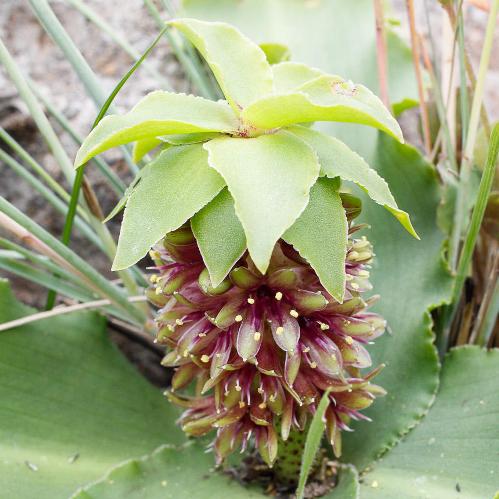
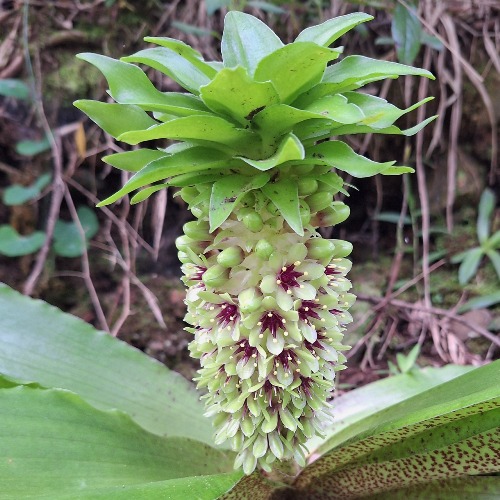
Eucomis is a southern African genus of flowering plants in the Hyacinthaceae family. The species name Eucomis is of Greek origin, eu- meaning “pleasing” and kome “hair of the head”, which refers to the tuft of leaf-like bracts that crown the inflorescence of the species in this genus. They are bulbous perennials with basal rosettes of leaves with stout stems covered in star-shaped flowers. Plants are commonly known as Pineapple Lilies because in several of the species the flowers resemble a pineapple. Most of the species are indigenous to the summer rainfall areas of South Africa. They grow well in rockeries and pots and under cultivation they have proved to be cold hardy, particularly when planted deeply. They are best grown in the shade and given regular water during their active growth period. This is particularly true of plants grown in sun as otherwise the leaves will become limp and burn. Plants belonging to the Eucomis genus are found in South Africa, Botswana, Lesotho, Swaziland, Zimbabwe and Malawi. Species can be found in grassland, forest, swamps and on river banks.
Eucomis montana, commonly known as Montane Pineapple Lily, is a South African indigenous species found in the Mpumalanga province extending into Eswatini. This is one of the six bicoloured species of Eucomis and one of the few dwarf species, occurring in the Mpumalanga Province. The flower stalk stands between 300–400 mm high, with densely packed flowers and crowned by a tuft of leaf-like bracts. The leaf-like bracts can have maroon edging, depending on where it grows. The flowers have an unpleasant smell, are greenish white, with dark maroon anthers and ovary. It flowers in late summer. This Eucomis can also be used as a border plant or planted en masse, adding a different look to the garden. Remember to plant it amongst a flat groundcover so that the flowerbed does not look empty in winter, when it goes dormant. It is also an excellent container plant and provides a long-lasting cut flower.


