
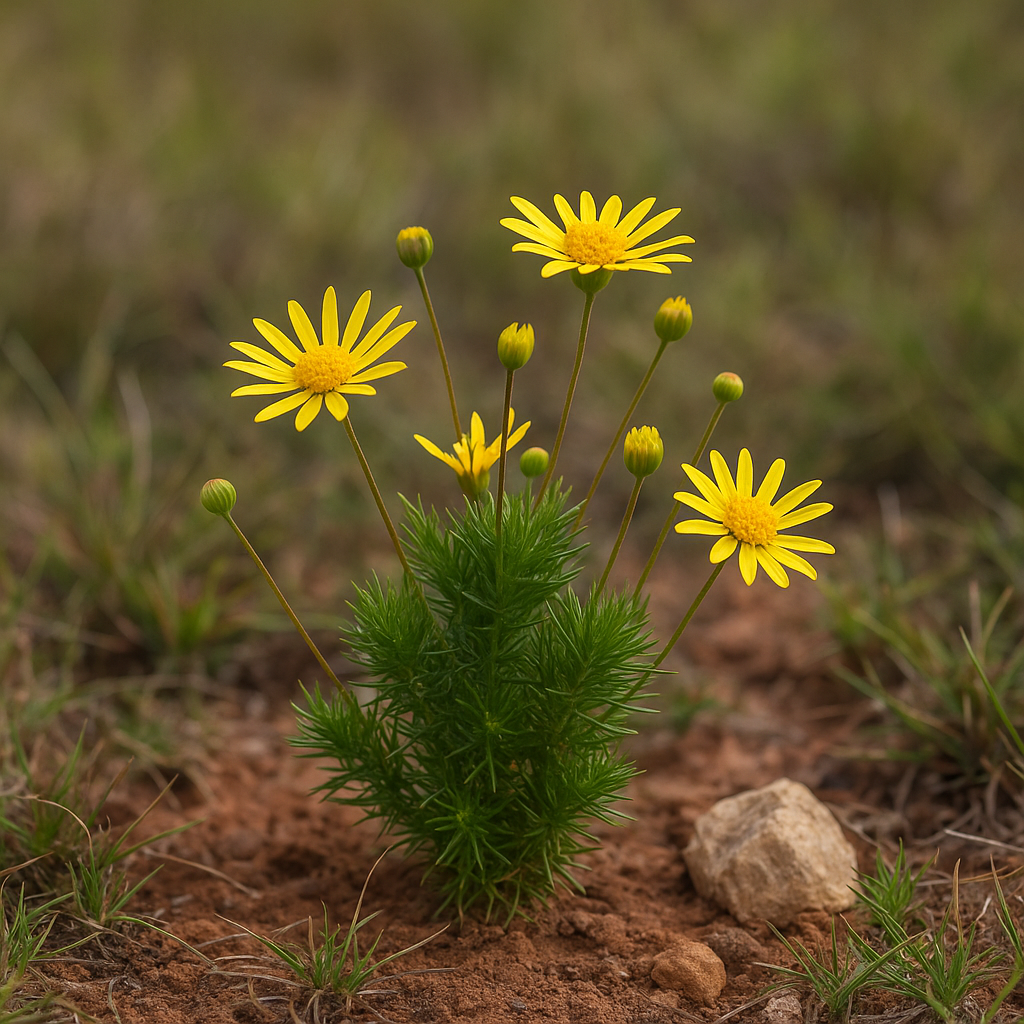
Euryops laxus (Gamolepis debilis) – Harpuisbossie; Loose Resin Bush – 5 Seed Pack
R23,50
INTERNATIONAL CUSTOMERS: Please read our shipping terms and conditions here before placing your order: Shipping Terms and Conditions
6 in stock
Euryops is the quintessential “fynbos daisy” – a genus of sun-loving shrubs and subshrubs that light up rocky hillsides and grasslands across southern Africa with masses of golden flowers. Belonging to the daisy family (Asteraceae), Euryops species are generally evergreen, drought-tolerant and long-lived, forming neat hummocks or woody mounds covered in fine, often aromatic foliage. When in bloom they can be almost completely smothered in bright yellow daisies, creating a haze of colour that draws in bees, butterflies and other pollinators.
In nature, many species grow in tough, exposed places – sandstone ridges, shale bands, gravel plains, mountain slopes and coastal scrub – where poor soils, wind and seasonal drought are the norm. These harsh origins make them exceptionally well suited to water-wise, low-maintenance gardens around South Africa and in dry-summer or Mediterranean-type climates worldwide. With their intricate foliage and generous flowering, they bridge the gap between ornamental shrubs and hardy steppe or rock-garden plants.
For gardeners and collectors, the genus offers remarkable diversity: from tiny, moss-like cushions to upright, architecturally branched shrubs; from fine, erica-like leaves to bold ferny foliage; from tight button heads to broad-rayed daisies. Grown from seed, Euryops is fast to establish, rewarding the patient grower with plants that are both resilient and spectacular, whether they’re anchoring a fynbos bed in the Cape, brightening a dry border in Gauteng, or bringing a taste of the South African veld to gardens overseas.
Euryops laxus (Gamolepis debilis, Gamolepis laxa, Gamolepis pectinata natalensis) – Harpuisbossie; Loose Resin Bush
Euryops laxus adopts a somewhat looser, more open habit than many of its relatives, with arching stems and graceful sprays of dissected foliage. This airy structure allows it to mingle beautifully with grasses, restios and other open-textured plants, creating a natural, flowing look. Yellow daisy flowers are held on the ends of these relaxed stems, giving the impression of scattered stars in a cloud of green.
In the wild, Euryops laxus is associated with open, often rocky habitats where it can sprawl lightly over stones and through neighbouring vegetation. It appreciates full sun and soils that drain rapidly after rain. In cultivation, flowering is usually most pronounced during the cool, moist season – late winter and spring – and the plant responds very well to light pruning, which encourages fresh growth and more flower-bearing shoots.
No widely used common name exists for this species, and it is mostly sold as Euryops laxus. From seed, plants vary slightly in openness and height, letting gardeners choose whether they prefer looser or denser individuals. For South African and international buyers seeking a less formal, more naturalistic daisy shrub, this species is ideal, weaving effortlessly through prairie, fynbos or gravel plantings.


