
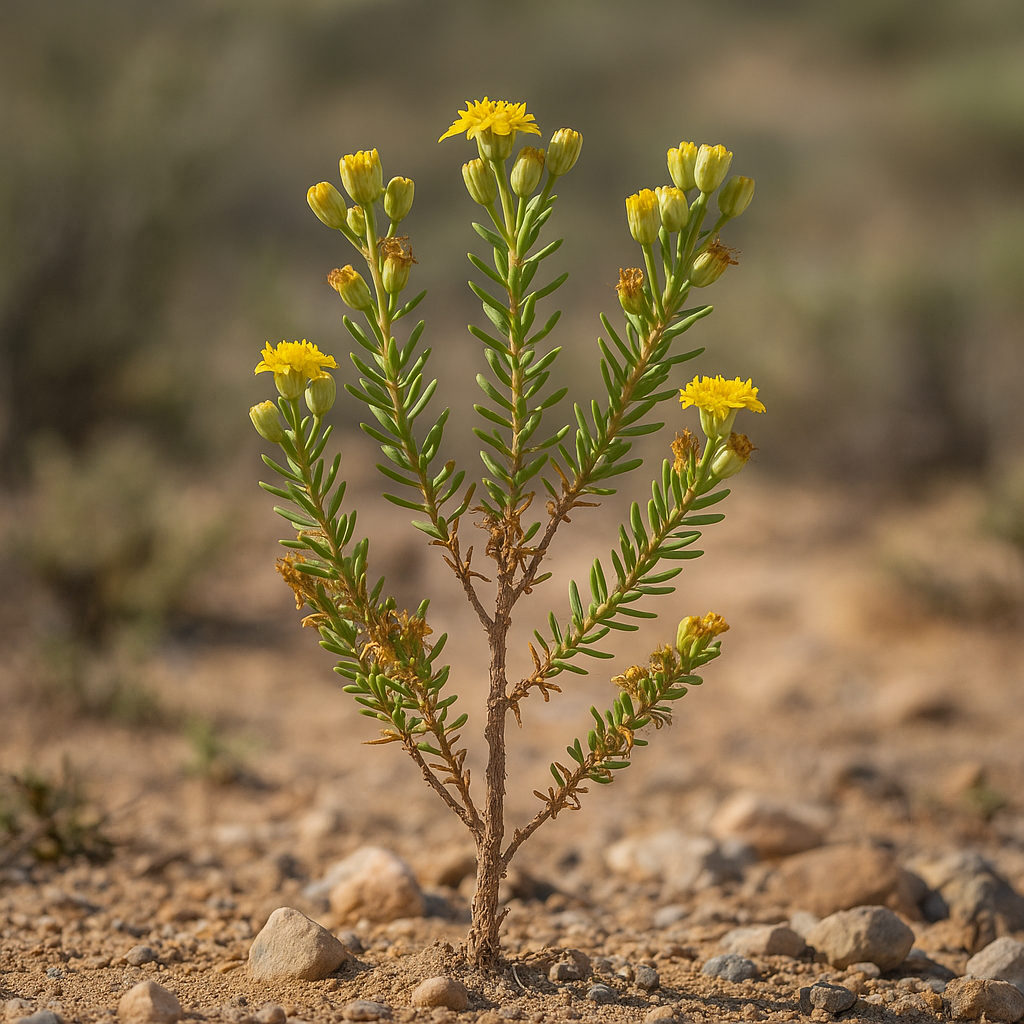
Euryops oligoglossus (Jacobaeastrum oligoglossum) – Water True-Eye; Water Harpuis – 5 Seed Pack
R29,50
INTERNATIONAL CUSTOMERS: Please read our shipping terms and conditions here before placing your order: Shipping Terms and Conditions
5 in stock
Euryops is the quintessential “fynbos daisy” – a genus of sun-loving shrubs and subshrubs that light up rocky hillsides and grasslands across southern Africa with masses of golden flowers. Belonging to the daisy family (Asteraceae), Euryops species are generally evergreen, drought-tolerant and long-lived, forming neat hummocks or woody mounds covered in fine, often aromatic foliage. When in bloom they can be almost completely smothered in bright yellow daisies, creating a haze of colour that draws in bees, butterflies and other pollinators.
In nature, many species grow in tough, exposed places – sandstone ridges, shale bands, gravel plains, mountain slopes and coastal scrub – where poor soils, wind and seasonal drought are the norm. These harsh origins make them exceptionally well suited to water-wise, low-maintenance gardens around South Africa and in dry-summer or Mediterranean-type climates worldwide. With their intricate foliage and generous flowering, they bridge the gap between ornamental shrubs and hardy steppe or rock-garden plants.
For gardeners and collectors, the genus offers remarkable diversity: from tiny, moss-like cushions to upright, architecturally branched shrubs; from fine, erica-like leaves to bold ferny foliage; from tight button heads to broad-rayed daisies. Grown from seed, Euryops is fast to establish, rewarding the patient grower with plants that are both resilient and spectacular, whether they’re anchoring a fynbos bed in the Cape, brightening a dry border in Gauteng, or bringing a taste of the South African veld to gardens overseas.
Euryops oligoglossus (Euryops triqueter, Jacobaeastrum oligoglossum) – Water True-Eye; Water Harpuis, Waterharpuibossie, Waterharpuis, Water-Harpuis, Waterharpuisbos, Wildeharpuis
Euryops oligoglossus is a more specialised, lesser-known member of the genus that nonetheless offers great ornamental potential. It forms neat, bushy shrubs with finely divided, soft foliage typical of many Euryops species. Yellow daisies are borne in modest but eye-catching numbers at the ends of the stems, providing that familiar splash of sunshine in the garden.
This species is native to sunny, well-drained locations in South Africa and is fully adapted to periods of drought and lean soils. In cultivation it responds best to full sun, moderate watering and a gritty, low-nutrient substrate. Flowering usually occurs in the cooler, wetter months, making it a valuable contributor to late-winter and spring displays.
Euryops oligoglossus has no widely used common name and is typically sold only under its botanical name, often attracting collectors who appreciate its relative rarity. From seed it is straightforward, and seedlings quickly form tidy shrubs ideal for rockeries, borders and water-wise landscapes. International gardeners can use this species to add subtle diversity to their collections of South African daisies.


