
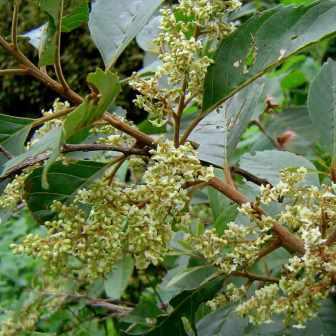
Maesa lanceolata – False Assegai; Valsassegaai – 5 Seed Pack
R22,45
INTERNATIONAL CUSTOMERS: Please read our shipping terms and conditions here before placing your order: Shipping Terms and Conditions
31 in stock
Maesa is a genus of flowering plants. It is placed in the family Primulaceae, subfamily Maesoideae, for which it is the sole genus.
An apple-green tree-shrub gives shade to a cool, inviting stream: this idyllic prospect is repeated a million times in KwaZulu-Natal, South Africa’s garden province. All too often the shade turns out to be from an invasive willow, but here is a charming indigenous alternative. Maesa lanceolata commonly known as False Assegai in English and Valsassegaai in Afrikaans is a very variable species as it can be a straggling shrub, 2 to 3 m tall, or a small tree with a single stem up to 9 m tall, or a rounded bushy tree with branches almost at ground level. Leaves spirally arranged, lance-shaped, 40-180 x 25-130 mm, tapering to pointed tips, sometimes with blunt or rounded tips, and simple, pale or dark green, with toothed margins. The midrib and lateral veins are conspicuously raised below. Sometimes the leaves are large and thick and resemble those of Curtisia dentata, the assegai, and are often mistaken for this plant. The bark is usually smooth and brown. Flowers are minute, bisexual, sweetly scented, white or yellow, in many-flowered sprays in the axils of leaves and at the ends of branches. Flowering in spring (peak in October in KwaZulu-Natal) but it has been observed flowering on and off throughout the year. Matured fruit are usually found in March, usually crowded in dense sprays, are creamy-white, edible berries that have remnants of calyx lobes at the top, 3-6 mm in diameter. Ground-up fruits in milk are given to a child at night as a treatment for ringworm. The roots are used for steaming and as a purgative to remove pimples. In some parts of Zululand, when a girl is getting married, her family selects a suitable shrub of umalunguzalazikhakhona for her. On the eve of her wedding, she takes her final bath at home before she leave for the groom’s home. She takes this bath in the bushy shrub while doing this she rubs herself against the leaves of this plant. After this bath she does not put on any clothing but wraps herself in with a blanket and then her father leads her to the groom’s home. Bathing in this shrub will take away all the curses that may have been cast on her marriage.


