
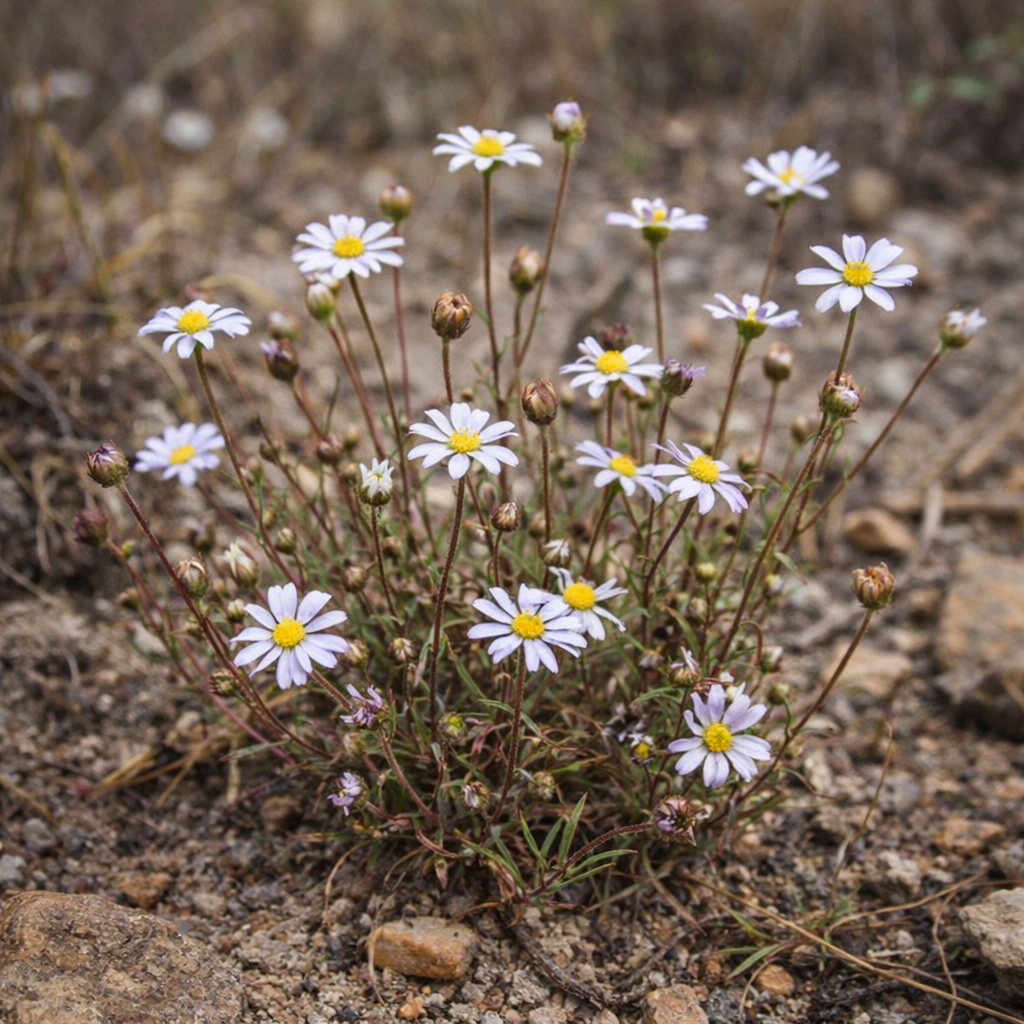
Felicia tenella subsp. pusilla (Aster tenellus pusillus) – 5 Seed Pack
R22,50
INTERNATIONAL CUSTOMERS: Please read our shipping terms and conditions here before placing your order: Shipping Terms and Conditions
2 in stock
The genus Felicia is one of southern Africa’s most charming daisy groups, celebrated for its sparkling yellow centres framed by ray florets in shades of blue, violet, lilac and white. Belonging to the Asteraceae, these plants range from tiny ground-hugging cushions and rocky crevice specialists to airy shrublets dancing above dry grasslands and fynbos slopes. Many Felicia species are exquisitely adapted to harsh conditions – sun, wind, poor soils and seasonal drought – yet reward gardeners with clouds of cheerful blooms that attract bees, butterflies and other pollinators. With their wild elegance and remarkable resilience, Felicia daisies bring a distinctly South African brilliance to gardens worldwide.
Felicia tenella subsp. pusilla (Aster tenellus pusillus)
If you’re looking for a tiny, charming Felicia that looks like it belongs on a rocky seep or tucked into the edge of a wild pathway, Felicia tenella subsp. pusilla is a standout. It’s compact and naturally delicate, producing small daisy flowers that feel wonderfully “found” rather than planted – perfect for gardeners who want authenticity and subtle beauty.
This subspecies is a South African endemic, recorded from Northern Cape and Western Cape Provinces. It naturally suits open, sunny ground with well-drained soil and light competition, and it looks most convincing when planted in a small group where the blooms can appear scattered across a living mat.
Plants are low-growing with fine stems and small foliage, forming compact little patches that can gently spread. The daisies are petite, with a warm yellow centre and pale rays that often appear soft lilac to lavender – especially in bright natural daylight. The overall effect is a miniature wildflower scene, ideal for photographic, high-detail plantings.
Seed-grown colonies are excellent for rockeries, crevice gardens, gravel beds, and the front of raised planters where small plants won’t be shaded out. It’s also a lovely species for collectors who enjoy raising indigenous daisies that feel genuinely botanical and regionally true.
Cultivation Note: Use a gritty, fast-draining seed mix, sow shallowly, and keep evenly moist until the seedlings are established. Grow on in bright light/full sun, and thereafter water carefully – enough to prevent stress, but never so much that the soil stays heavy and wet.


