
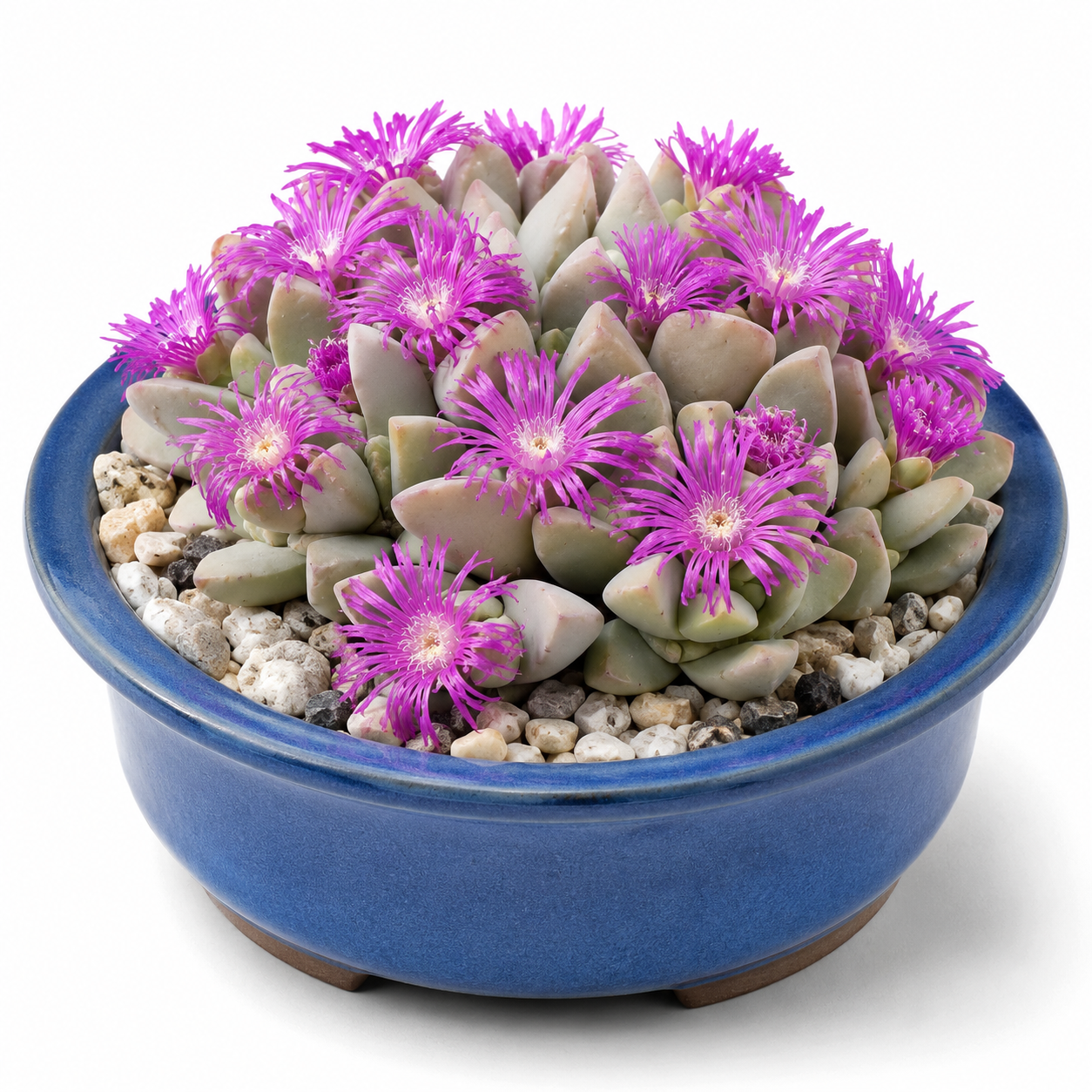
Gibbaeum hartmannianum – Ruens Humpfig – 5 Seed Pack
R35,00
INTERNATIONAL CUSTOMERS: Please read our shipping terms and conditions here before placing your order: Shipping Terms and Conditions
36 in stock
Gibbaeum is a fascinating South African genus of miniature succulents in the family Aizoaceae, the richly diverse vygie or mesemb family. These remarkable little plants are true gems of the arid Cape, especially the Little Karoo and surrounding regions, where they often grow almost hidden among quartz pebbles, stony flats and dry, open ground. Their name comes from the Latin word meaning “hump”, a fitting reference to their thick, rounded, uneven leaf pairs, which give many species a curious sculptural appearance unlike almost anything else in the succulent world.
Part of the appeal of Gibbaeum lies in its subtle beauty. These are not large, showy plants, but close-up treasures for collectors who appreciate texture, form and adaptation. Many species form tight clumps of paired succulent leaves, often grey-green, blue-green, whitish, velvety or softly hairy, allowing them to blend naturally into their harsh, sun-baked habitat. This camouflage, together with their water-storing leaves and seasonal resting habit, makes Gibbaeum a superb example of survival through refinement rather than size.
When in flower, Gibbaeum reveals a softer side. The usually solitary blooms appear in shades of pink, white, mauve or purple, often opening in response to seasonal rain and transforming these pebble-like plants into delicate living jewels. For succulent collectors, mesemb enthusiasts, rock-garden growers and lovers of unusual South African flora, Gibbaeum offers all the charm of a rare botanical curiosity: compact, drought-wise, distinctive, and deeply connected to the ancient dry landscapes of the Cape.
Gibbaeum hartmannianum (Gibbaeum austricola, Gibbaeum haagei parviflorum) – Ruens Humpfig
Gibbaeum hartmannianum is a superb miniature South African mesemb for collectors who appreciate rare, sculptural succulents with a strong sense of place. Belonging to the Aizoaceae family, this distinctive species is endemic to the Western Cape, where it is known from the Lower Breede River Valley in the Swellendam and Eastern Overberg region. Its naturally limited distribution and striking appearance make it a highly desirable species for specialist succulent growers, mesemb enthusiasts and collectors of South African botanical treasures.
This beautiful species forms compact, low-growing clumps of thick, paired succulent leaves that sit close to the soil like smooth, living stones. The plant bodies are chunky, wedge-shaped to triangular, with a soft grey-green to pale green colour and subtle pinkish, mauve or beige flushing near the tips and upper surfaces. Mature plants develop into handsome clustered mounds, each head made up of fleshy, sculptural leaf pairs that look especially attractive when grown in a shallow pot with a gritty mineral top dressing.
In flower, Gibbaeum hartmannianum is spectacular. The blooms are vivid magenta-pink to purple, daisy-like and finely petalled, opening in generous numbers above the pale succulent bodies. The bright flowers, with their pale centres, create a dramatic contrast against the muted grey-green leaves and make mature plants exceptionally ornamental. In habitat, flowering is typically associated with the cooler growing season and spring, when seasonal moisture encourages active growth and bloom production.
For South African growers, Gibbaeum hartmannianum is best suited to bright, airy conditions, excellent drainage and careful watering, particularly in regions with cool winters and dry summers. International growers can cultivate it very successfully in pots, alpine houses, dry greenhouses, windowsill collections and under grow lights, provided that the plants are kept in a gritty, free-draining medium and protected from prolonged wet, humid or stagnant conditions. It is a slow, refined species that rewards patience with exceptional form and flower.
Gibbaeum hartmannianum seeds are ideal for growers wanting to raise a rare and highly collectible South African succulent from the beginning. Sow on the surface of a fine, gritty mesemb mix, keep lightly moist during germination and early establishment, and gradually harden seedlings into brighter, drier conditions as they mature. Check out our online seed store for a vast and diverse selection of rare succulents, mesembs and unusual South African species. Buy Now or Add to Cart to start growing this remarkable Overberg gem and enjoy the convenience of Seeds and All offering combined South African and international shipping.


