
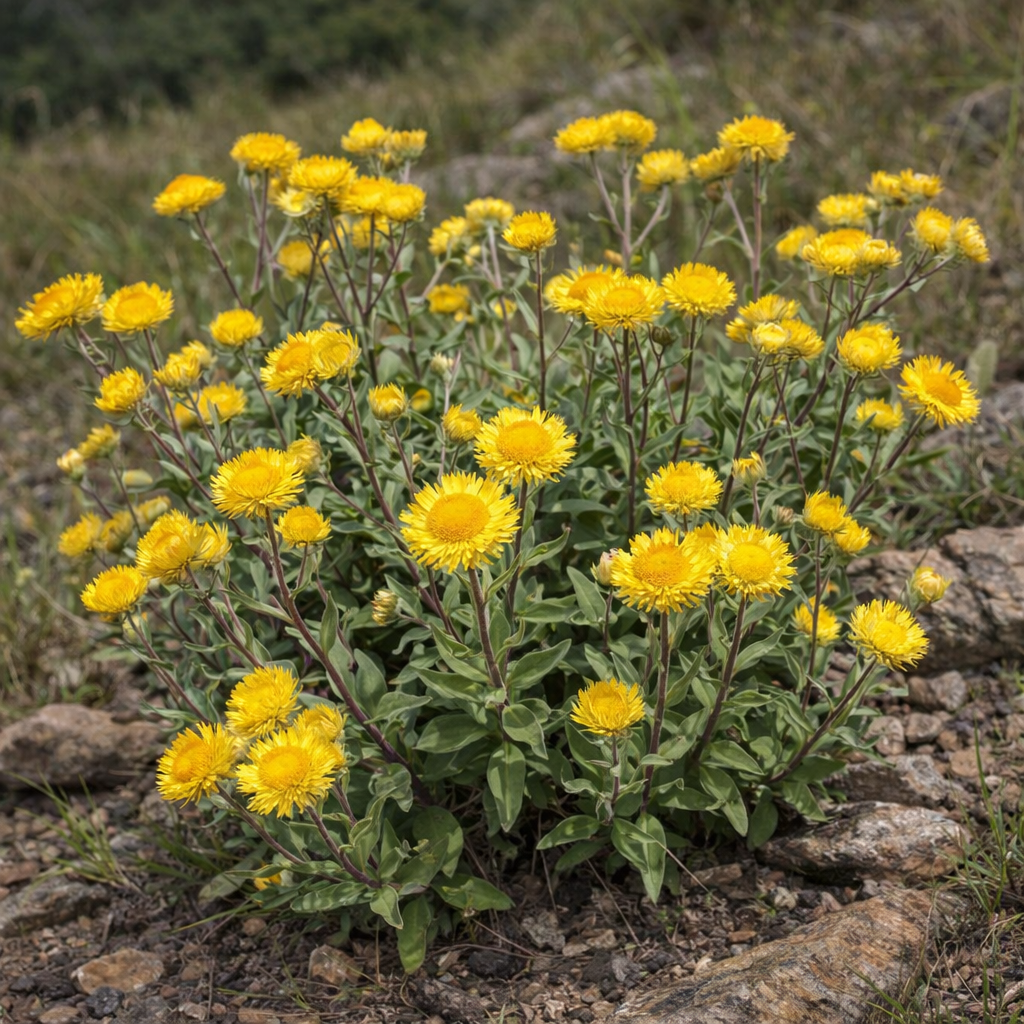
Helichrysum cooperi – Drakensberg Yellow Everlasting; Geelsewejaartjie – 5 Seed Pack
R15,75
INTERNATIONAL CUSTOMERS: Please read our shipping terms and conditions here before placing your order: Shipping Terms and Conditions
8 in stock
There’s a reason Helichrysum has earned names like “everlasting,” “strawflower,” and “golden immortelle.” Across Africa, Eurasia, Madagascar, and even parts of Australia, this remarkable genus has adapted into an astonishing range of forms – from compact alpine cushions on windswept peaks to sprawling coastal pioneers on dunes, and tall, aromatic shrubs rising through savanna grassland. Many species seem almost sculpted for harshness: felted leaves that reflect heat, resinous scent glands that reduce water loss, and papery bracts that hold their colour long after flowering.
In southern Africa especially, Helichrysum becomes a signature of wild landscapes. Some species carpet high Drakensberg slopes like silver mats; others form tidy, upright tufts in montane grassland; and some are so specialised that they cling to cliff faces or root into shallow pockets of stony soil. The flowers, often arranged in tight button-clusters or open daisy-like heads, glow in tones of yellow, cream, white, pink, copper, red, and rose – and in many species the “petals” are actually brilliantly coloured bracts that preserve their beauty even when dried.
Beyond their ornamental appeal, Helichrysum carries deep cultural importance. Many species are traditionally used for fragrance, medicinal preparations, ceremonial burning, and as protective plants. For modern growers, they offer the irresistible combination of wild provenance, drought resilience, and striking textures – a true collector’s genus, equally suited to naturalistic gardens, rockeries, alpine troughs and habitat restoration planting.
Helichrysum cooperi – Drakensberg Yellow Everlasting; Geelsewejaartjie, Sewejaartjie
If you want a bold, architectural Helichrysum with presence, Helichrysum cooperi delivers height, fragrance, and high-impact golden heads. It occurs in grassland and savanna settings from the low Drakensberg area south through Lesotho and KwaZulu-Natal’s uplands into the Transkei and Eastern Cape – making it a classic southern African montane-to-grassland species with broad cultivation potential.
This South African indigenous biennial or perennial aromatic herb can reach up to about 1.5 m, with robust stems and large leaves that often run down the stem in “wings” (decurrent leaves). The flowerheads are generous and showy, carried in a large, spreading, leafy panicle; the involucral bracts are glossy bright yellow, creating that unmistakable “everlasting” glow. Flowering is in the warm season, from December to April.
In landscaping it’s ideal as a sunny background plant, a seasonal feature in meadow-style plantings, or a dramatic cut-flower subject for large, long-lasting arrangements. For collectors, it’s especially satisfying because the combination of aromatic foliage, tall habit, and abundant golden heads feels distinctly wild-southern-African – yet still very garden-usable in temperate regions with summer growth and good light.


