
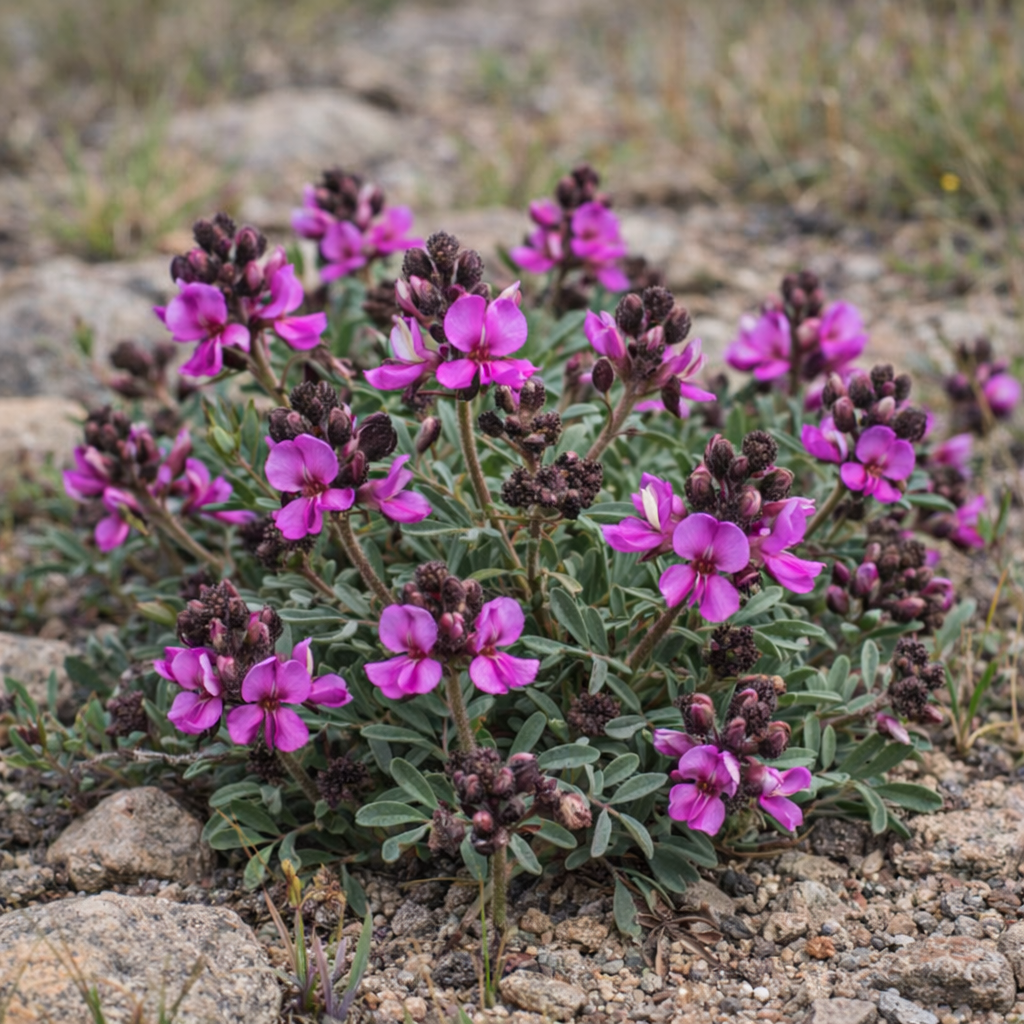
Indigofera hedyantha (Indigofera secunda) – Regret Indigo; Aambeibossie – 5 Seed Pack
R21,50
INTERNATIONAL CUSTOMERS: Please read our shipping terms and conditions here before placing your order: Shipping Terms and Conditions
16 in stock
Indigofera is one of those “once you notice it, you see it everywhere” genera – an immense, cosmopolitan group of legumes, placed in the Fabaceae family, found across the warmer parts of the world, from dry slopes and rocky ridges to grasslands, coastal systems, and woodland edges. Depending on the species, Indigofera can be a tiny, ground-hugging mat, a wiry perennial with delicate leaflets, or a tougher shrublet built for sun, wind, and poor soils.
For gardeners and collectors, the appeal is irresistible: finely pinnate foliage with an elegant, fern-like texture, and pea-flowers that arrive like little jewels – often in pinks, reds, rosy–magenta, purples, lilacs, or soft bicolours – either sprinkled along the stems or packed into lively racemes. The name itself hints at its heritage: “Indigofera” literally means “bearing indigo,” a nod to the famous dye history within the group.
Many Indigofera species are also classic “tough-love” plants – adaptable, sun-friendly, and well-suited to naturalistic planting, rock gardens, restoration-style beds, and biodiversity-focused spaces. And because they’re legumes, they’re often associated with beneficial root symbioses that help plants cope in lean soils – great news for low-input gardens and wild-style landscapes.
Indigofera hedyantha (Indigofera secunda) – Regret Indigo, Black-bud Indigo; Aambeibossie
Indigofera hedyantha is a standout for collectors who love South African endemics and the subtle differences that make each species feel distinct in cultivation. Indigofera hedyantha is a perennial shrub, often called the black-bud indigo or aambeibossie, native to seasonally dry tropical regions from Kenya to South Africa. It thrives in high-altitude montane grasslands, rocky outcrops, and open, sunny areas, particularly in Gauteng, Mpumalanga, and KwaZulu-Natal. It requires well-drained soil and flowers from September to February.
In a group planting, it can present as a naturally “wild” legume – multiple stems arising close together, with compound foliage that creates a fine, airy texture. The flowers are typical Indigofera pea-flowers, bringing that charming, nectar-friendly look that suits wildlife gardens as well as collector pots and beds.
Flowering-month detail is not always consistently stated across references for every locality, so the best practical approach is to expect peak flowering in the warmer, brighter part of the year when growth is active and plants have had a good moisture run-up. Sow into a sharply drained mix, give warmth and strong light, and grow on hard for robust plants. Check out our online seed store, buy now, and explore our massive range – Seeds and All offers combined South African and International shipping.


