

Polaskia chende – 5 Seed Pack
R13,00
INTERNATIONAL CUSTOMERS: Please read our shipping terms and conditions here before placing your order: Shipping Terms and Conditions
16 in stock
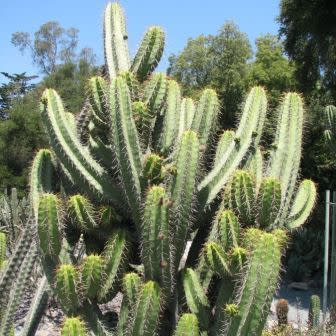
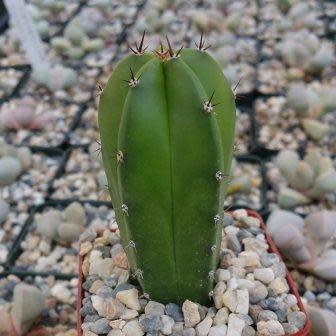
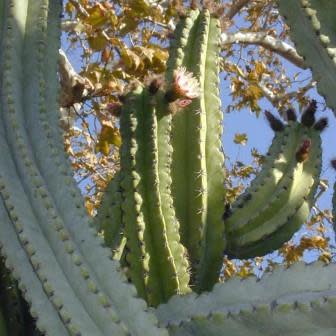
Polaskia is a genus of two tree-like cactus species, placed in the Cactaceae family. It is named after the American amateur botanist, Charles Polaski. Both species grows to 5 meters in height. Both present primitive characteristics, but Polaskia chichipe is nearer to Myrtillocactus while Polaskia chende is nearer to Stenocereus. The genus is found in the Southern Mexican states of Puebla and Oaxaca. They are columnar cacti which branches as it ages with many branches on a short trunk. Stems are ribbed with fairly shallow spaces between ribs. Areoles are spaced 2 or 3 cm apart along the ribs. Spines are short and stout, numbering 8-10 radials and one central. Spines may not be present at all – especially on mature plants. Flowers are widely-opened cups of pinkish white or yellow-green – with or without spines. The fruits are small fleshy berries. They are considered fairly easy to grow and germinate freely from seed. These cacti are perfect for rockeries, where they will give your garden structural height or as potted plants on a sunny patio. Either way you are assured of many years of joy.
Polaskia chende is a large columnar cactus that grows in central Mexico, especially in the states of Puebla and Oaxaca at 1500m or higher. It may reach 4.5m tall and stems may be 60cm across. The fruit is harvested. Polaskia chende is one of two species in the genus, the other is Polaskia chichipe. Polaskia chende has primitive features as cacti go, and is related to Stenocereus. Plants branch many times, especially from near the base; thus, they send up many columns. The pale flowers may be 5-7cm across, and the fruits are spherical 7-10cm across. The edible fruits are consumed locally. Wild and managed populations are used to provide fruit, and fruits from managed populations are larger but with thinner peels.


