
Wahlenbergia denticulata (Campanula denticulata) – 5 Seed Pack
R28,00
INTERNATIONAL CUSTOMERS: Please read our shipping terms and conditions here before placing your order: Shipping Terms and Conditions
13 in stock
Wahlenbergia is a diverse and charming genus of flowering plants in the Campanulaceae (bellflower) family, comprising over 200 species distributed across temperate and subtropical regions of the Southern Hemisphere. Known for their delicate, star- to bell-shaped flowers—often in shades of blue, violet, or white—these hardy herbaceous plants can be found from alpine slopes and grasslands to rocky outcrops and coastal plains.
The genus is especially well represented in southern Africa and Australasia, where many species have adapted to a wide range of environmental conditions. Their graceful growth habit and prolific flowering make them valuable in both wildflower meadows and rock gardens, while their ecological role as nectar sources supports a variety of pollinators.
Species within Wahlenbergia are generally low-growing perennials or annuals with fine, wiry stems and simple leaves. Despite their modest appearance, they are resilient and often thrive in poor soils and exposed conditions. The genus is named in honour of Swedish botanist Göran Wahlenberg (1780–1851), a prominent figure in botanical exploration and alpine ecology.
Due to their adaptability and aesthetic appeal, Wahlenbergia species are increasingly appreciated in ecological restoration, native planting schemes, and low-maintenance garden designs.
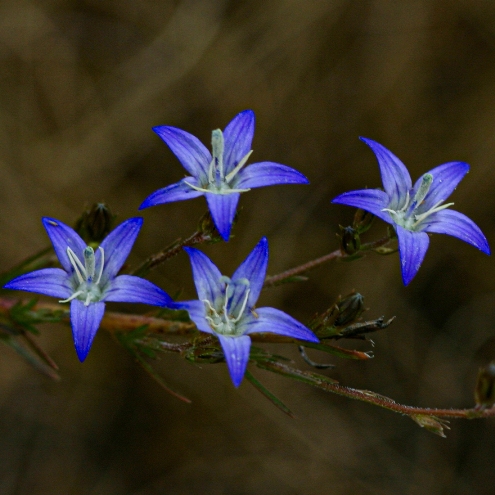
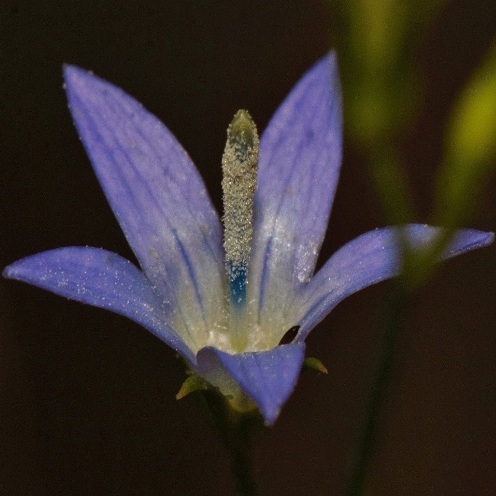
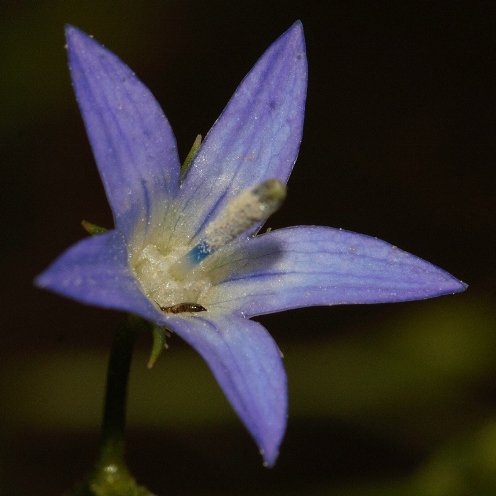
Wahlenbergia denticulata, synonymously known as Campanula denticulata, Lightfootia denticulata, Lightfootia denticulata var. denticulata, Lightfootia dinteri, Lightfootia intricata or Wahlenbergia denticulata, is a South African indigenous species found in the Eastern Cape, Free State, Gauteng, Limpopo, Mpumalanga, Northern Cape and North West provinces. It is a somewhat subshrubby perennial or rarely annual herb, reaching up to 1 meter in height, with numerous decumbent or ascending stems. The leaves are alternate, sessile, and linear-lanceolate with finely toothed (denticulate) margins. The flowers are typically white to deep blue, with a deeply split corolla composed of linear-lanceolate lobes. It’s found in woodland and grassland, often in sandy or rocky places, from Kenya to South Africa and West to Angola and the Democratic Republic of Congo. Throughout the year, depending on its distribution it produces eye-catching flowers.


