
Pavetta schumanniana – Boomgousiekte, Gifbruidsbos; Poison Bride’s Bush, Poison Pavetta; Mukhobekwa, Tshituku – 5 Seed Pack
R20,00
INTERNATIONAL CUSTOMERS: Please read our shipping terms and conditions here before placing your order: Shipping Terms and Conditions
3 in stock
Pavetta is a genus of flowering plants in the family Rubiaceae. It comprises about 360 species of trees, evergreen shrubs and sub-shrubs. It is found in woodlands, grasslands and thickets in sub-tropical and tropical Africa and Asia. The plants are cultivated for their simple but variable leaves, usually opposite but also occur in triple whorls. The leaves are often membranous with dark bacterial nodules. Pavetta has small, white, tubular flowers, sometimes salviform or funnel-shaped with 4 spreading petal lobes. The flowers are carried on terminal corymbs or cymes.
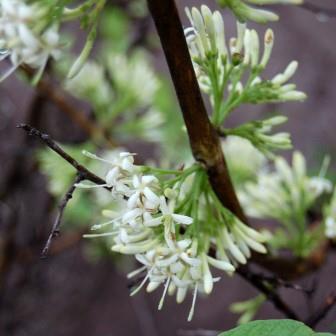
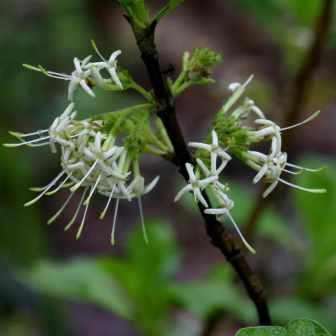
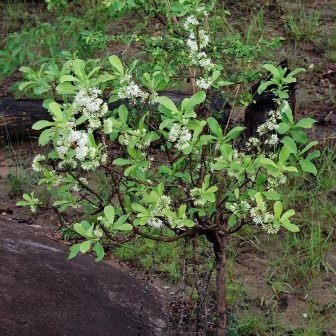
Pavetta schumanniana commonly known as Poison Bride’s Bush in English and Gifbruidsbos in Afrikaans is a shrub or tree often about 3.5 m tall, reaching 7 m in Kwazulu-Natal and 8.4 m in Tanzania. Leaves usually opposite, sometimes in whorls of 3, with interpetiolar stipules (small leaf like outgrowths on the stem between the bases of the leaves of a pair), egg-shaped, widest beyond the middle, 60-150 x 20-75 mm, shiny bright green with few rough hairs above, soft grey hairs below; tip rounded, margins not toothed, base tapering gradually into a short stalk. Flowers white, sweetly scented, in dense clusters on stalks, up to 20 mm long just below the leaves (September to February in South Africa). Fruits round, buff to black, fleshy, up to 8 mm in diameter. Like most species of Pavetta, the leaves of the poison bride’s bush have black spots that are visible when the leaf is held up to the light. These are bacterial nodules, and the bacteria sheltering in them fix nitrogen from the air, releasing it in a form the host plant can use. The white, scented flowers have all the features needed to attract moths, and one may deduce that they are moth-pollinated. Moths usually fly at twilight or at night, when almost any colour of flower other than white would be invisible. Scents serve to inform potential pollinators of the existence of a plant offering a reward nearby; that humans generally enjoy the aroma of these pheromones is a co-incidental benefit to gardeners. The black, fleshy fruits stand out against the green of the foliage and make them attractive to animals (presumably birds) which eat the fruits and spread the seeds.


