
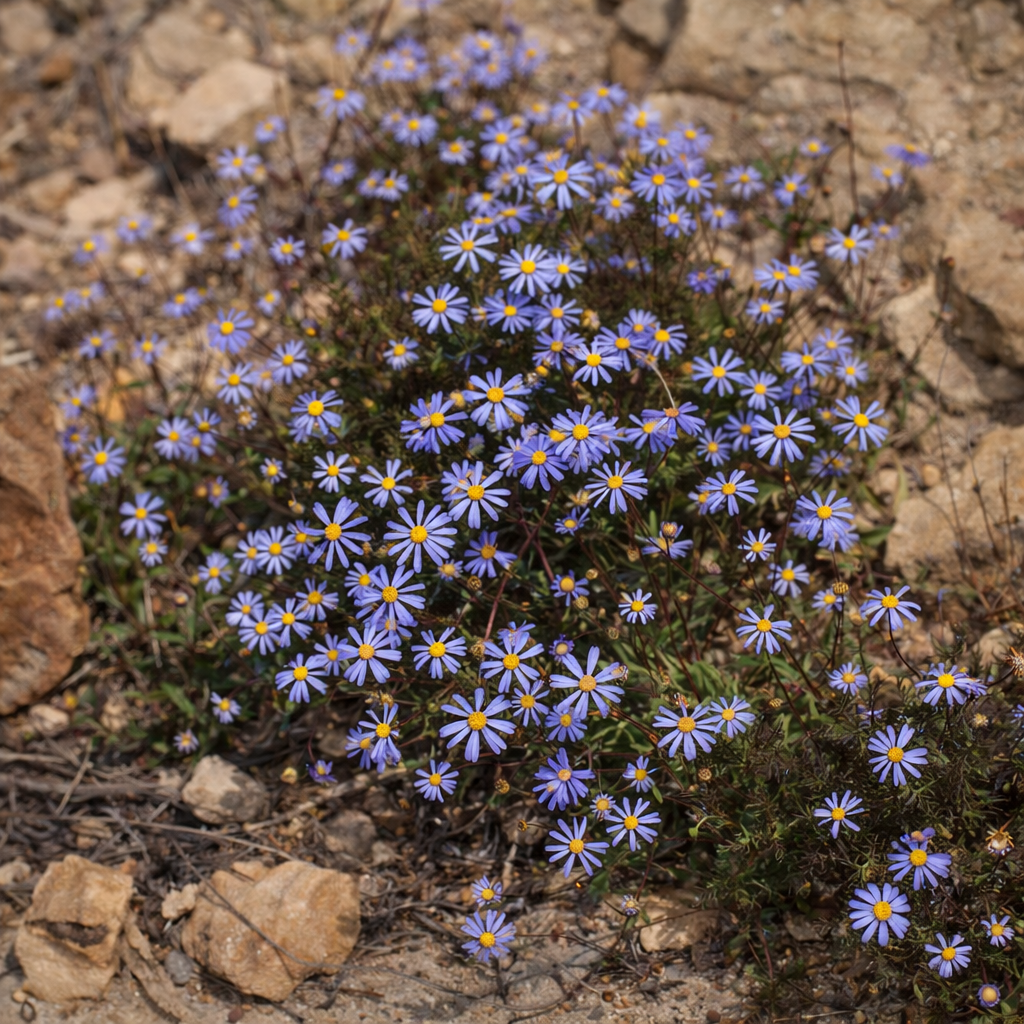
Felicia bergeriana (Aster bergerianus) – Kingfisher Daisy – 5 Seed Pack
R22,50
INTERNATIONAL CUSTOMERS: Please read our shipping terms and conditions here before placing your order: Shipping Terms and Conditions
1 in stock
The genus Felicia is one of southern Africa’s most charming daisy groups, celebrated for its sparkling yellow centres framed by ray florets in shades of blue, violet, lilac and white. Belonging to the Asteraceae, these plants range from tiny ground-hugging cushions and rocky crevice specialists to airy shrublets dancing above dry grasslands and fynbos slopes. Many Felicia species are exquisitely adapted to harsh conditions – sun, wind, poor soils and seasonal drought – yet reward gardeners with clouds of cheerful blooms that attract bees, butterflies and other pollinators. With their wild elegance and remarkable resilience, Felicia daisies bring a distinctly South African brilliance to gardens worldwide.
Felicia bergeriana (Agathaea bergeriana, Aster bergerianus, Cineraria bergeriana, Elphegea bergeriana, Felicia bergerana) – Kingfisher Daisy, Azure Felicia
Felicia bergeriana is a beautifully balanced species for buyers who want an authentic, fine-textured Felicia that flowers generously without looking bulky or overly domesticated. It’s a strong candidate for indigenous gardens in South Africa and for international growers who can offer bright light, cool-to-mild winters, and excellent drainage.
This is a South African endemic species found in the Northern Cape and Western Cape Provinces, occurring in natural vegetation where sun exposure is high and soils tend to shed water quickly. In these settings, plants are often shaped by wind, bright light, and intermittent moisture – traits that translate well to rock gardens and gritty pots.
Plants are low and bushy with neat foliage, sending up slender stems topped by yellow-centred daisies with lilac-toned rays. Flowering is commonly recorded in the late winter to spring window for many Cape daisies, and herbarium-based field records show flowering collections through spring months (notably around Aug – Oct).
Cultivation Note: For best flowering, grow in full sun with a sharply draining mix; water more regularly during active growth, then ease off between cycles. Light tip-pruning after flowering can keep plants compact and encourage a fresh flush for the next season.


