

Wooleya farinosa (Namaquanthus farinosus) – 5 Seed Pack
R19,00
INTERNATIONAL CUSTOMERS: Please read our shipping terms and conditions here before placing your order: Shipping Terms and Conditions
50 in stock
Wooleya is a monotypic genus of flowering plants belonging to the family Aizoaceae. It only contains one known species, Wooleya farinosa. It is also in tribe Ruschieae. It is endemic to the Northern Cape Province of South Africa. The genus name of Wooleya is in honour of Charles Hugh Frederick Wooley (1894–1969), an English naval officer, natural scientist and citrus grower. He also supplied Kirstenbosch National Botanical Garden with succulents from around South Africa. The Latin specific epithet of farinosa means farinaceous (having a floury texture or grainy) derived from farina meaning flour.
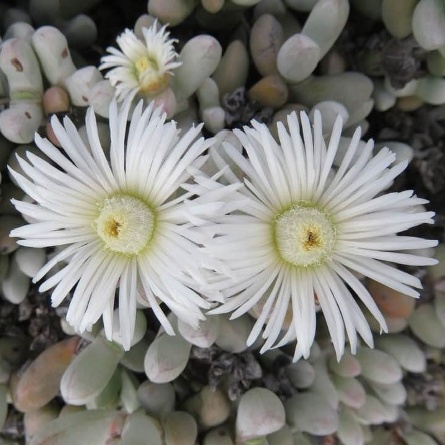
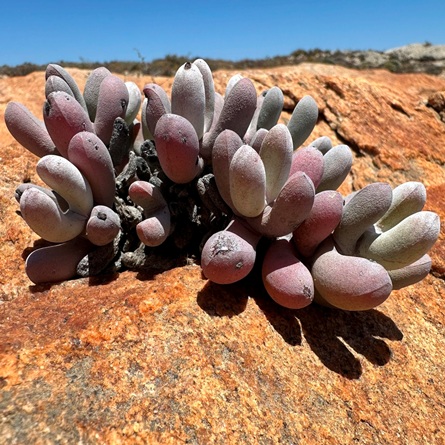
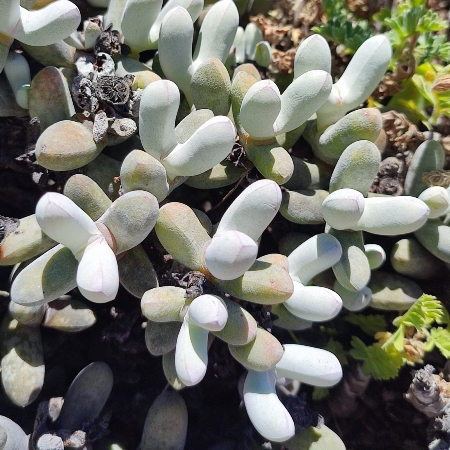
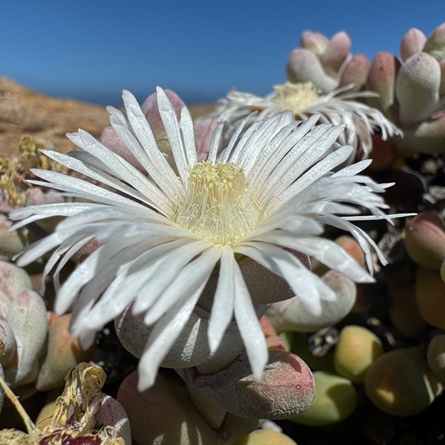
Wooleya farinosa, synonymously known as Namaquanthus farinosus, is found from Port Nolloth to Hondeklipbaai growing on coastal sands within the coastal mistbelt zone. Wooleya farinosa gets only 50 – 100 mm of annual winter rainfall in its native area, but this is supplemented by fog, which provides an important source of supplemental moisture. Mature plants form small shrubs about 20 cm high and as much as 50 cm across. The stems of Wooleya farinosa are slender, yet stiff and woody. The grey-green leaves emerge in pairs, fused at their bases where they clasp the stem, and protruding like stubby fingers on either side. On closer inspection, there is an upper leaf surface which is slightly flattened, and a rounded lower surface. However, the marginal lines are subtle, and the overall impression is of short thumbs. At the tip, the leaf comes to a blunt point. In habitat, the leaves are ash-grey, but in cultivation they tend to be greener. The older leaves may become yellowish or tinged orange.


