
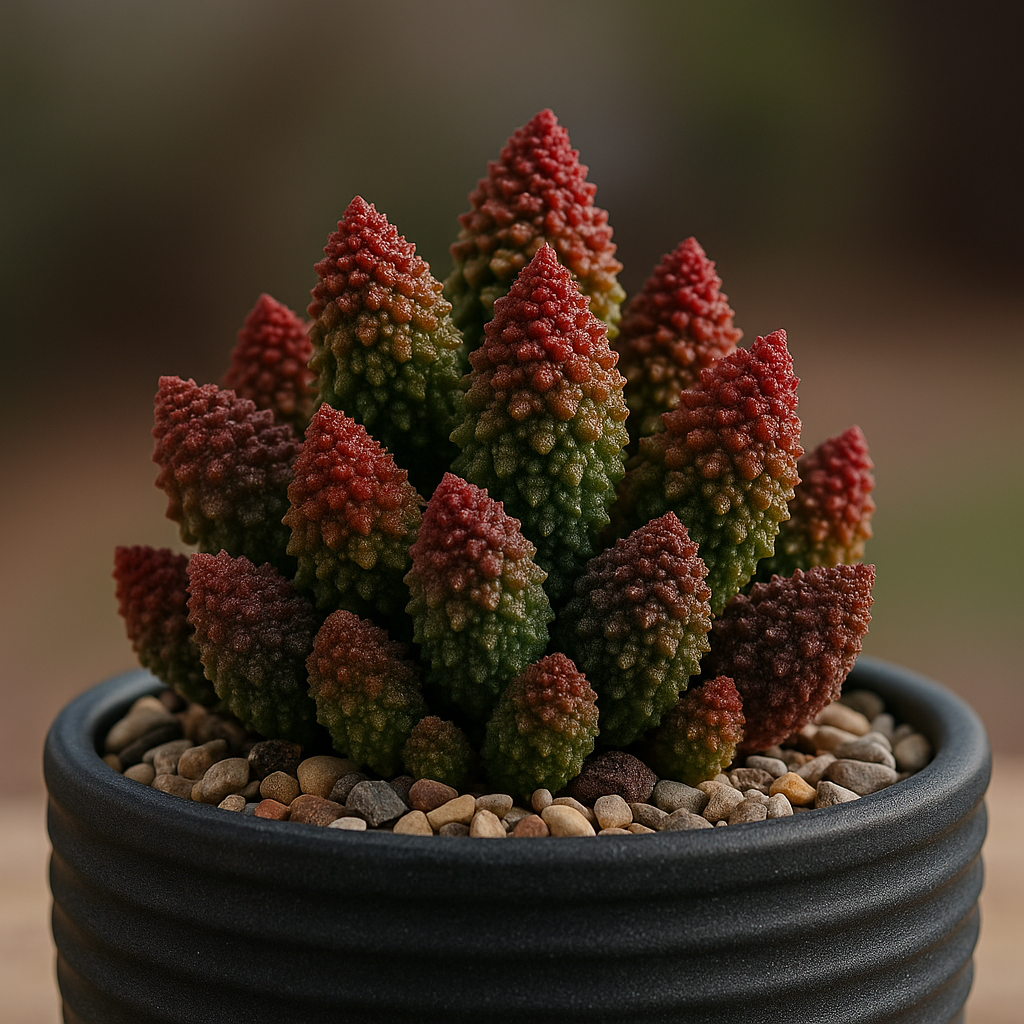
Adromischus marianiae ‘Herrei’ (Adromischus herrei) – 5 Seed Pack
R85,00
INTERNATIONAL CUSTOMERS: Please read our shipping terms and conditions here before placing your order: Shipping Terms and Conditions
20 in stock
Adromischus is a compact but irresistibly diverse genus of leaf-succulent “miniatures” in the stonecrop family, Crassulaceae. The name comes from Greek, with adros meaning “thick” and mischos “stem”, a nod to the chunky little stems that anchor their often bizarre leaves.
All recognised species are endemic to southern Africa, mainly South Africa with some reaching into Namibia, where they inhabit rocky slopes, cliff faces and arid shrublands in both winter- and summer-rainfall regions.
Despite their small size, Adromischus offer tremendous variety: leaves can be spotted or plain, triangular or spindle-shaped, chalky white or deep green, smooth or heavily textured. Many species are cespitose, forming tight mats or clusters of short stems that slowly spread over time.
Their flowers are usually slender, tubular spikes in shades of green, white and pink – modest compared with their leaves, but invaluable for section and species identification. For collectors and beginners alike, they are famously easy to propagate from single leaves, making them ideal subjects for experimentation and sharing.
For South African growers, Adromischus bring the magic of the Karoo and Cape mountains onto a sunny stoep or windowsill. Internationally, they are perfect for bright indoor collections and under-glass culture, thriving in small pots of very gritty mix and tolerating a wide range of climates as long as they are kept dry and well-lit. Their compact size, drought tolerance and fascinating variation also make them excellent subjects for seed-grown collections, where every seedling can show its own unique patterning or leaf shape.
Adromischus marianiae ‘Herrei’
Adromischus marianiae ‘Herrei’ (often seen as Adromischus marianae f. herrei or formerly as Adromischus herrei) is one of the most sought-after forms in the genus. It forms a tiny shrub with thin, short stems topped by clusters of extremely rough, warty leaves that can look like little clusters of dried berries. The leaves are usually green to reddish-brown or purple, turning grey and waxy with age, each leaf irregularly lobed and deeply textured.
In habitat, ‘Herrei’ originates from the Little Namaqualand and coastal mountains of Namaqualand in the Northern Cape, often appearing on granite or sandstone rock faces and in crevices where fog and winter rain provide just enough moisture.
It is a classic winter-rainfall succulent: ideal for cool, bright conditions with excellent drainage in South African coastal gardens and in Mediterranean-style or indoor collections worldwide.
The flowers are small, green with pinkish tints, borne on delicate spikes a little above the foliage in the warmer months.
Because ‘Herrei’ can be challenging and slow in cultivation, raising plants from seed is a rewarding long-term project for serious collectors. Expect seedling variation in leaf texture and colour, and remember that patience is essential – the bizarre, sculptural look develops with age.


